Deploy persistent applications on Kubernetes with Shipa and Portworx
Shipa integrates with Portworx in order to support persistent applications requirements while creating a Developer experience around storage management


ITOM or IT Operations Management is an umbrella term that covers all activities involved in the setup, design, configuration, deployment, and maintenance of the infrastructure that supports business services in an organization. Simply put, ITOM is how the IT landscape is managed in your company. From network security, configuration, and monitoring to devices, applications, and personnel, ITOM is what keeps your IT going. Generally, ITOM leverages several tools to manage these activities individually.
There has been a lingering perception that Java applications are slower than applications written in other languages. So, if performance is important for your application, you should not be considering Java as the programming language to use. This perception was true about 20 years ago, when Java was initially used for developing applications. In the early Java implementations, it took a long time for the Java Virtual Machine (JVM) to start.
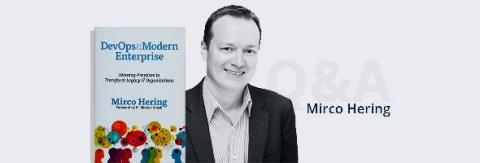
Mirco Hering is principal director of APAC DevOps and Agile with Accenture. He supports major public and private sector companies in Australia and overseas in their search for efficient IT delivery. Mirco blogs about IT delivery at NotAFactoryAnymore.com and is author of “DevOps For The Modern Enterprise: Winning Practices to Transform Legacy IT Organizations.”
The traditional method of planning server, network, and storage capacity is to look at the usage peaks and then add a safety margin. Most cloud hosting is planned this way. The idea that you only pay for what you use is not based on actual usage, rather on the capacities you initially specify. Most cloud migrations involve a ‘lift and shift’ approach of moving an application to a different host with minimal maintenance.
Terms such as DevOps, Agile and LEAN are now used in a single bundle. If a project is created according to the LEAN methodology, all processes become more efficient with DevOps and Agile, making it possible to remain flexible and respond quickly to changes. In this article, we will share seven best practices you need to follow when adopting a DevOps model.
As we announced last week, the Nexthink ‘Through the Crisis’ series gives our customers a voice to talk about what the challenges of 2020 have been like for them professionally – working from home while trying to cope with the huge upsurge in demand and responsibility.
With several countries finally emerging from lockdowns and markets showing signs of economic recovery, we’ve seen the newscycle steadily shift its focus away from Covid-19. And that will be reflected in our robotics recap as well. Let’s get right to it.