Operations | Monitoring | ITSM | DevOps | Cloud

How to migrate MySQL databases to a cloud environment?

Migrating MySQL databases to a cloud environment can seem daunting, but with the right approach, it ensures minimal downtime and a seamless transition. The key to a successful migration lies in thorough planning and preparation. This involves understanding your database's complexity, estimating the data volume, and determining the levels of downtime acceptable for your organization.
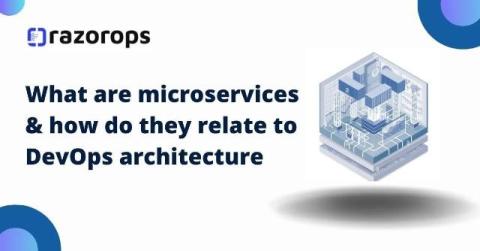

What are microservices, and how do they relate to DevOps architecture

Microservices are an architectural style that structures an application as a collection of small, loosely coupled, and independently deployable services. Each service in a microservices architecture focuses on a specific business function and communicates with other services through well-defined APIs, typically over HTTP/REST or messaging queues.

Cribl's Blueprint for Secure Software Development.

What does it take to build software for the most security-demanding customers worldwide? At Cribl, building secure products is integral to our engineering identity. We have established a secure software development lifecycle that is both culturally and policy-driven, integrating product security tooling and processes into every architecture review, pull request, and release, whether major or minor.

Introduction to Ingesting Logs into Loki with Fluentd and Fluent Bit | Zero to Hero: Loki | Grafana

Have you just discovered Grafana Loki and plan to use FluentD or Fluent Bit as your telemetry collector? Or are you trying to decide which agent is right for you? In this "Zero to Hero" episode, we cover the basics of FluentD and Fluent Bit, highlighting their differences and helping you determine when to use one over the other. Additionally, we guide you through configuring both agents' Loki plugins to write logs directly into Loki.

Learning Moment: Effective Customer Communication During Incidents - Enhance Visibility & Response with Uptime.com

The recent global outage caused by an operating system update reminded me of how vulnerable we are today and most importantly, how close we are always teetering on global scale incidents with millions of interconnected dependencies. When the base of the house collapses, everything built on top is impacted. Those of us in IT Operations, Monitoring, Observability (insert the current acronym), etc., know firsthand this risk; we face it every day.

Chaos Testing Explained

Chaos testing is a part of site reliability engineering (SRE). In chaos testing, we intentionally break things in and around a given application, in order to: The purpose of chaos testing is to assess how software systems respond to scenarios like network outages, hardware failures, database failures, and server or cluster node failures in the infrastructure.

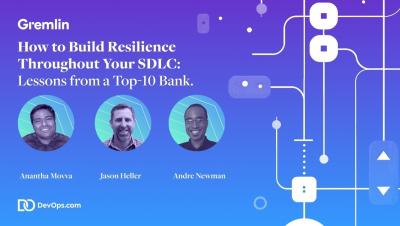
How to Build Resilience Throughout Your SDLC Lessons from a Top 10 Bank

Are your applications as reliable as you planned? How do you know? The only way to ensure systems are resilient to common failure conditions is to test them, yet many large enterprises struggle with the effort and expense to do so. In this webinar, Anantha Movva, a former head of SRE and Performance Engineering at one of the top 10 North American banks, will share how he drove Chaos Engineering and resilience testing adoption throughout his organization.

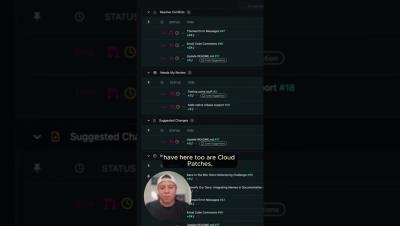
Features for Better Code Collaboration #shorts #GitKraken

Discover an easier way to review code changes with Code Suggestions! Now, you can approve commits and suggest changes without being limited to specific lines of code. Or, maybe you need quick feedback on WIPs? Cloud Patches let you share your work with your team at any stage of the development process. Collaborate smoothly, get early input, and keep your repos neat and organized.