Operations | Monitoring | ITSM | DevOps | Cloud

Sponsored Post

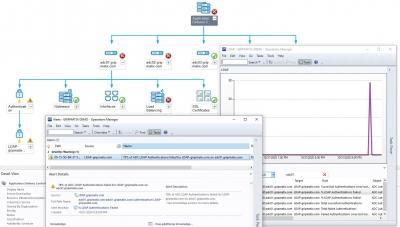
Validating your IT environment, discovering browser extensions & more with EventSentry v4.2

This latest update to EventSentry improves your security posture with validation scripts, simplifies IT troubleshooting for both administrators and users, gives you visibility into installed browser extensions along with many other usability improvements in the web reports.

Launching AppSignal Monitoring for Node.js 1.0

Do you know how many errors your Node.js application had last week? How many users were affected? Which servers were high on CPU/Memory/Disk? If you do know, how many different tools did you have to install, and how many hours you’ve spent configuring all those tools? AppSignal is here to change the way you monitor your apps and simplify your life as a developer. Today, we officially launch the 1.0 version of @appsignal/node.js.

Quick and Easy Way to Implement Kubernetes Logging

The SolarWinds® Papertrail™ team is excited to announce SolarWinds rKubeLog, an open-source project designed to streamline Kubernetes logging. rKubeLog allows you to forward logs to Papertrail from within a Kubernetes cluster without using a daemon or setting up application-level logging or a logging sidecar. rKubeLog is a quick and easy way to implement logging for applications running in Kubernetes clusters.

How Our Latest Release Makes Your PagerDuty Experience Frictionless

In a world that’s always on, keeping services up and running isn’t just ideal—it’s mission-critical for all of PagerDuty’s customers. It’s not lost on us that serving as the central nervous system for digital operations at some of the world’s largest companies is no small job.

Watchdog surfaces root cause insights and Kubernetes anomalies

Since 2018, Watchdog has provided automatic anomaly detection to notify you of performance issues in your applications. Earlier this year, we introduced Watchdog for Infra, enhancing Watchdog to also monitor your infrastructure. We’re pleased to announce the latest enhancements to Watchdog, which now provides more visibility and greater context around the full scope of each application issue.

Introducing RancherD: A Simpler Tool for Deploying Rancher

As part of Rancher 2.5, we are excited to introduce a new, simpler way to install Rancher called RancherD. RancherD is a single binary you can launch on a host to bring up a Kubernetes cluster bundled with a deployment of Rancher itself. This means you just have one thing to manage: RancherD. Configuration and upgrading are no longer two-step processes where you first have to deal with the underlying Kubernetes cluster and then deal with the Rancher deployment.

Rancher 2.5 Delivers On "Computing Everywhere" Strategy

Despite the lockdown restrictions of the last six months, I'm delighted to announce that we've released Rancher 2.5 on schedule today. This latest release represents another major milestone of Rancher's "Computing Everywhere" strategy by delivering management capabilities that match the extraordinary popularity of Amazon EKS and our lightweight Kubernetes distribution, K3s.

Now GA: Cortex blocks storage for running Prometheus at scale with reduced operational complexity

We’ve just launched Cortex 1.4.0, one of the most significant releases of 2020. The big headline: The new blocks storage engine has exited the experimental phase and is now marked as Generally Available. Blocks storage aims to reduce the operational complexity and costs of running a Cortex cluster at scale. In particular, it removes the dependency from a NoSQL database to store series indexes.

Introducing the InfluxDB Template UI: Monitoring Made Simple

At InfluxData, we’re obsessed with time to awesome — how quickly can you start working productively with time series data? What can we do to make things better? InfluxDB Templates are a great example of this mindset. Back in April, we announced Templates as a way to package up everything you need to monitor a particular technology — Telegraf configurations and InfluxDB Dashboards, Tasks, Alerts, and related artifacts — into a single configuration file.