The automotive industry is entering a stage in which vehicles are no longer defined solely by mechanical performance, hardware features, or physical components. Increasingly, the value of a vehicle is shaped by the software systems that control its functions, interfaces, updates, and user experience.
Top Tips is a weekly column where we highlight what’s trending in the tech world today and list ways to explore these trends. This week, we’re looking at which tasks you can delegate to AI. We've all struggled to delegate tasks. Whether you're a junior struggling to prioritize your tasks on a daily basis or a manager unsure of assigning responsibilities, you know how messy task delegation can get. Some people just improvise while others have a method to this madness.
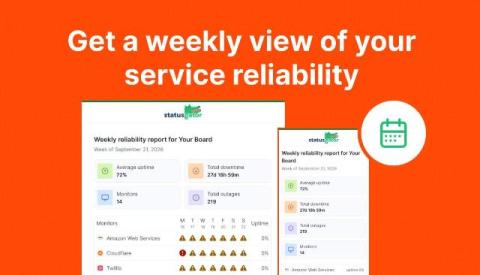
StatusGator now monitors more than 8,000 services now! From cloud platforms and AI tools to communication apps, payment providers, developer infrastructure, and business software, we continue expanding our monitoring coverage every day so teams can track everything that matters in one place.
SAP customers with complex SAP know the challenges of managing multiple landscapes well. While classic tools like SAP Landscape Management (LaMa) and Focused Run served us well for years, they were built for a static, on-premises world. Now, with the 2027 end-of-support deadline for legacy solutions looming, the "fog" of hybrid management is getting thicker.
This walk-through shows how Splunk Cloud can search AWS S3 data through an Apache Iceberg REST catalog backed by Nessie. Learn how Iceberg table metadata, S3 storage, and Splunk Federated Search work together so analysts can query historical security data where it lives without reingesting it into Splunk.
Security teams are drowning in vulnerabilities. We’re talking tens of thousands of findings per quarter. Hundreds of thousands at larger organizations. Today's IT environments have no boundaries and span across every OS platform. Managing and securing that estate in a linear fashion is no longer viable, and neither is a vulnerability remediation process that treats every fix as a simple, low-impact task.
A new attack technique called Underminr was disclosed this week. It slips past protective DNS by abusing shared CDN edge IPs. The DNS query looks clean. The connection lands on malware. This post walks through what Underminr is, why protective DNS misses it, what actually stops it, and the OTHER DNS layer most teams forget to watch.
Companies are shipping AI features at a pace cloud teams have rarely seen. New agents, new copilots, new flows powered by language models, all moving from prototype to production in weeks. The spend that comes with it is real and accelerating, and most teams are seeing it on the invoice before they see it anywhere else. The question is no longer how much you're spending on AI. It's whether each dollar is producing a real outcome, and whether you can govern that spend before the next invoice arrives.
Gartner expects worldwide AI software spending to hit $2.59 trillion in 2026, 47% more than organizations spent last year. The dollars are real and growing fast. But most organizations still can't measure the ROI of that spend. The problem has two sides: developers and infrastructure. On the developer side, engineers are using AI to write nearly every line of new code, and leaders have no way to tell whether that spend is producing software that ships.