Operations | Monitoring | ITSM | DevOps | Cloud

Knowledge Graphs for Software Delivery: An Architectural Approach

Discover how software delivery knowledge graphs unify fragmented SDLC data, enable schema-as-code, and power deterministic AI reasoning across engineering teams. Software delivery knowledge graphs unify fragmented SDLC data across disparate tools by establishing explicit entities, typed relationships, and schema-as-code contracts. This transforms manual cross-system data stitching and non-deterministic AI reasoning into reliable, queryable knowledge. Key takeaways include.

Judgment, not generation: rebuilding our AI API Classifier on Jev

Rebuild AI API classification with Jev to cut costs, reduce latency, improve calibration, and make production decisions more efficient without sacrificing accuracy. Replacing the judgment step in a production classification pipeline with a purpose-built decision model changes the economics of the problem entirely.

What's taking DNS-PERSIST-01 so long?

In February, Let’s Encrypt announced that DNS-PERSIST-01 was coming, “some time in Q2 2026.” It’s October, and it’s nowhere close to ready. We’ve been waiting for DNS-PERSIST-01 since January, along with every other ACME client and lots of organizations. DNS-PERSIST-01 promised to simplify domain validation and make automation easier, but we had to wait on Let’s Encrypt. Let’s Encrypt is waiting on a redesign, a standards body, and maybe one more vote.

Deutsche Bank leads the way on secure adoption of AI enabled software delivery

As AI accelerates software development and expands its scale, Deutsche Bank is taking a leading role in ensuring the technology can be adopted safely, securely, and responsibly across regulated industries. As an investor, Deutsche Bank’s Corporate Venture Capital arm participated in Kosli’s Series A funding round, reinforcing the bank’s view that automated governance will be a key enabler of AI-assisted software delivery in regulated industries.

How Honeycomb Private Cloud Drinks From the Fire Hose

Back in July, I wrote about how the Tenant team (the team behind Honeycomb Private Cloud (HPC)) has embraced the code review bottleneck to focus more of its work. One of the other challenges we have is that we're downstream of almost all the other teams at Honeycomb, meaning that we have to package up everyone's code and services, and how it gets provisioned! This is something impossible to handle through code review since there are so many engineers on other teams, and so few of us.

How to Use OnPage Console Settings | Settings Overview

Learn how to navigate and manage the Settings section in the OnPage Console. In this video, we walk through the OnPage Console Settings and show administrators how to manage administrator accounts, permissions and groups, reusable message templates, notifications, security settings, and other organization-level preferences. The Settings section gives administrators a centralized place to configure their OnPage environment, control user permissions, and manage important account preferences.

OnPage Web Portal Reporting: Dashboard & Analytics Guide

Learn how to navigate the OnPage Web Portal Reporting Console and gain greater visibility into your organization’s critical messaging activity. In this video, we walk through OnPage’s reporting tools and show how administrators can review alert and message activity, delivery and response metrics, responder performance, account and group activity, and communication trends from one centralized dashboard.

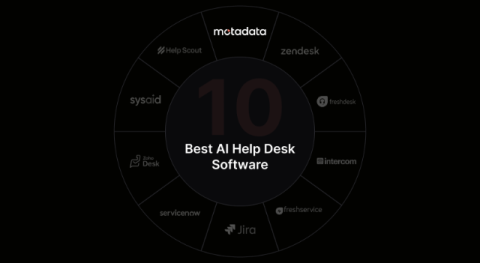
10 Best AI Help Desk Software for 2026

Are your support teams spending too much time handling tickets and answering repetitive questions? As support requests increase, teams spend more time reading conversations, assigning tickets, finding relevant information, and preparing replies. These tasks can take attention away from complex issues that require human support. AI help desk software can help reduce this workload. It can answer common questions, summarize tickets, suggest replies, route requests, and assist with support tasks.

ISO 27001 Compliance: What Auditors Require and When You Need the Certificate

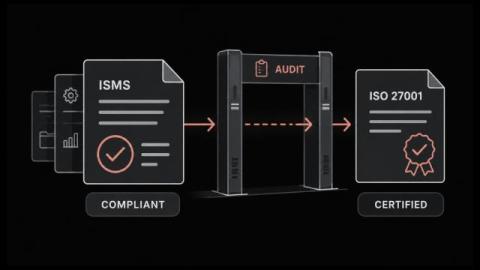
ISO 27001 compliance means running your information security the way ISO/IEC 27001 sets out. Most teams meet the standard when a customer sends over a security questionnaire. It lands as one more line on a cybersecurity compliance checklist. That framing hides the decision underneath it. You can follow the standard without ever being certified against it. The two routes cost very different amounts. In this blog, you will: You will finish able to decide whether you need the certificate, and what it takes.