The latest News and Information on CyberSecurity for Applications, Services and Infrastructure, and related technologies.
To say that the past year presented its fair share of cybersecurity challenges to the InfoSec community would be a drastic understatement. The rapid migration to remote work at scale left 80% of CIOs unprepared, and SecOps teams struggled to confront the evolving threat landscape with disparate toolkits and skill sets. Not to mention that as more organizations shifted to hybrid and multi-cloud environments at scale, cloud complexity (and cloud-based threats) skyrocketed.
Endpoint security is a hot topic of discussion, especially now with so many businesses shifting to remote work. First, let’s define what endpoints are. Endpoints are end-user devices like desktops, laptops, and mobile devices. They serve as points of access to an enterprise network and create points of entry that function as gateways for malicious actors. Since end-user workstations make up a huge portion of endpoints, we’ll be focusing on their security.
The University of California at Davis is an agriculturally focused university of more than 30,000 students. Founded in 1905, the university performs federally funded research for the U.S. Department of Defense, U.S. Department of Agriculture, and other agencies. It’s also home to an electric power substation, police and fire departments, and even an airport. All of this combined is a digital security challenge for Jeff Rowe, the university’s cybersecurity architect.
Authentication is at the heart of most web development, yet it is difficult to get right. In this article, Diogo Souza discusses common security problems with authentication systems and how you can resolve them. Even if you never build an authentication system from scratch (you shouldn't), understanding these security concerns will help you make sure whatever authentication system you use is doing its job.
Welcome to the second edition of Open Source Matters: our regular publication about the latest happenings in open source! Let’s dive into the news.
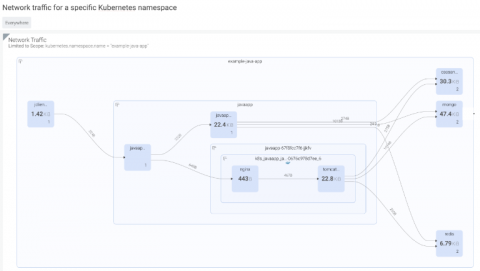
Kubernetes workloads are highly dynamic, ephemeral, and are deployed on a distributed and agile infrastructure. Application developers, DevOps teams, and site reliability engineers (SREs) often require better visibility of their different microservices, what their dependencies are, how they are interconnected, and which other clients and applications access them. This makes Kubernetes observability challenges unique.
In the past 2 and half months, we have refreshed the visual design of the CFEngine Mission Portal. You might already notice some differences in the navigation, iconography, and color set. This is a post to guide you through the major changes we made and also provide you an inside perspective into the design direction we are taking going forward.
A modified version of this blog post appeared in the June 2021 issue of Signal magazine. Decisions that need to be made in an instant require answers in real time, but existing big data systems are unable to return queries quickly enough for real-time analytics. And with growing data being queried by more connected users than ever before, it’s getting increasingly challenging to maintain fast reaction times.