Operations | Monitoring | ITSM | DevOps | Cloud

The latest News and Information on Monitoring for Websites, Applications, APIs, Infrastructure, and other technologies.

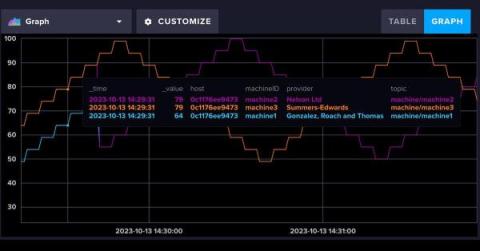
Choosing a Client Library When Developing with InfluxDB 3.0

A common question we get asked is “what client library should I use with InfluxDB 3.0?” This question isn’t as simple as it may seem. It can get confusing when deciding which client library to use while developing applications to write to and query from InfluxDB. There are numerous options to choose from and the answer may differ based on the following criteria: At first, this seems like an easy answer.

Top Microsoft Azure Cloud Services Explained with Use Cases

Microsoft Azure is one of the most comprehensive and broadly adopted cloud service providers in the industry, offering over 200 fully featured services from data centers globally. A wide spectrum of organizations across all verticals use Azure – to lower costs, become more agile and innovate faster. Tight integrations with the Microsoft ecosystem and product portfolio make Azure highly attractive to many.

DX NetOps In Action: How Altice Accelerates Network Transformation with Broadcom

Altice Portugal is a wholly owned subsidiary of Altice Group, a multinational cable and telecommunications company. They have a presence across Europe, including in Belgium, France, Luxembourg, Portugal, and Switzerland, as well as in the Dominican Republic, the French West Indies, and Israel. With annual revenues of more than $2.8 billion (2,629 million Euros), Altice Portugal is Portugal’s largest telecom company. Altice offers fixed, mobile, and satellite network services to consumers.

Monitoring machine learning models in production with Grafana and ClearML

Victor Sonck is a Developer Advocate for ClearML, an open source platform for Machine Learning Operations (MLOps). MLOps platforms facilitate the deployment and management of machine learning models in production. As most machine learning engineers can attest, ML model serving in production is hard. But one way to make it easier is to connect your model serving engine with the rest of your MLOps stack, and then use Grafana to monitor model predictions and speed.

The Significance of Root Cause Analysis in Revolutionizing Enterprise IT Operations

Ever been jolted awake by a midnight alarm because some server decided to take a sudden break? If you’ve been in IT operations, you know this isn’t just about fixing a problem; it’s about understanding and fixing it. Think of a favorite detective show, the detective is not just identifying the culprit, they are aiming to unravel the mystery “who done it?” and understand the motive.

Top tips: 5 use cases for digital twins in the manufacturing sector

Top tips is a weekly column where we highlight what’s trending in the tech world today and list out ways to explore these trends. This week we take a look at how manufacturing firms can use digital twins to completely overhaul the production process. A depiction of the digital twin-enabled industry of the future.

How Gaming Analytics and Player Interactions Enhance Mobile App Development

The number of mobile game users is expected to increase to 2.3 billion users by 2027, with a CAGR of 7.08%. The resulting projected market volume is a staggering $376.7 billion by 2027. Competition is fierce, and differentiation is key to winning out in this rapidly growing market. To understand their users and build better games, gaming companies need to use data analytics to interpret how players interact with their games. Effective use of video game data can help companies.

Monitoring Kubernetes with Prometheus

In part I of this blog series, we understood that monitoring a Kubernetes cluster is a challenge that we can overcome if we use the right tools. We also understood that the default Kubernetes dashboard allows us to monitor the different resources running inside our cluster, but it is very basic. We suggested some tools and platforms like cAdvisor, Kube-state-metrics, Prometheus, Grafana, Kubewatch, Jaeger, and MetricFire.

New API authentication Pandora FMS

Pandora FMS external API is used to integrate third party applications with Pandora FMS and now we will be able to authenticate against it using the Bearen Token. It is a type of identification through HTTP headers that allows that each registered user in our Pandora FMS server can generate its own identifier of unique correspondence to make calls to the same API. In today's video we are going to show you how to generate these identifiers of the users of our server and how to make calls to the API with this identifier.