The COVID-19 pandemic has been difficult for enterprises. Our CIO New Normal survey shows a litany of issues CIOs are dealing with. We discussed these challenges in our previous blogs here and here. But we also took note of the fact that some enterprises are actually doing quite well.
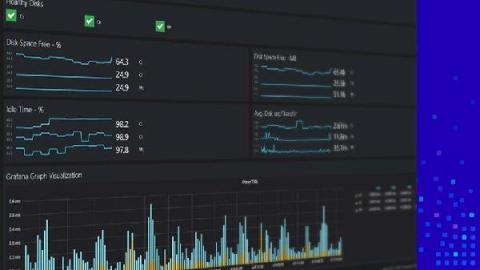
Here at CloudZero, we’ve made some updates to our dashboard that we’re excited to share with you! I actually prefer this original definition. When you hear the word dashboard, if you’re not thinking about software, you’re probably picturing the place in a car where you have various dials and readouts for safe operation of the vehicle. But did you know what the term dashboard predates cars?
For public IPs, it is possible to create tables that will specify which city specific ranges of IPs belong to. However, a big portion of the internet is different. There are company private networks with IP addresses of the form 10.0.0.0/8, 172.16.0.0/12 or 192.168.0.0/16 scattered in every country in the world. These IP addresses tend to have no real information for the geographic locations.
Over the last decade, data collection has become a commodity. Consequently, there has been a tremendous deluge of data in every area of industry. This trend is captured by recent research, which points to growing volume of raw data and growth of market segments fueled by that data growth.
For decades, compute or server infrastructure has been the backbone of the IT world. Compute has gradually evolved from on-premise hardware to programmable compute in the form of software containers. Technology operators need to constantly monitor the performance of their Windows, Linux, and container infrastructure so that they can optimize their compute environments to match workload demands.
I think I have been reading way too many “doom and gloom” articles this year about IT. For many companies, the switch to a prolonged work-from-anywhere (WFA) model has exposed serious cracks within their IT infrastructure. To be honest though, the cards have been stacked against IT for some time and 2020 was just the tipping point. Employees often resist new work technologies and there’s mounting evidence to prove that IT tends to overestimate how well their services are received.
One of the defining features of snaps is their strong security. Snaps are designed to run isolated from the underlying system, with granular control and access to specific resources made possible through a mechanism of interfaces. Think of it as a virtual USB cable – an interface connects a plug with a slot. Security and privacy conscious users will certainly be interested in knowing more about their snaps – what they can do and which resources they need at runtime.
Many of us hate our backup environments. That’s because backups kind of suck, even with a backup product as great as IBM Spectrum Protect. As I said in another post, it’s the thing that everyone needs, but no one cares about, and most definitely can make your life crappy. Ask any backup admin, and I know they’ll agree. Go ahead; I’ll wait. Yep, they said the same thing, didn’t they?