How Automation Simplifies Network Compliance in the Financial Sector
The global march towards delivering operational resilience across the financial sector steadily continues.


The global march towards delivering operational resilience across the financial sector steadily continues.
In this k6 series I have covered HTTP request testing with k6 and performance testing with k6. I designed these tutorials to introduce you to k6 and to show you how to use k6 for performance testing of microservices. As the third tutorial in the k6 series, this will cover how you can store your k6 test results locally and also how to schedule your load tests using CircleCI’s scheduled pipelines feature.
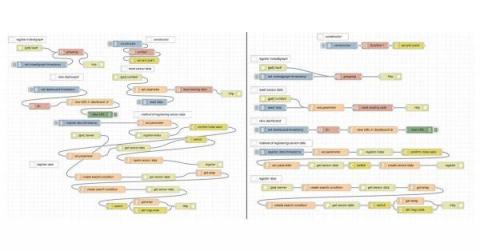
In this article you will learn about Node-RED, a popular tool for rapidly gluing together different types of hardware and software. You’ll learn about some of the core concepts of Node-RED and then learn how to make some workflows like storing data from a sensor using an MQTT broker and InfluxDB.
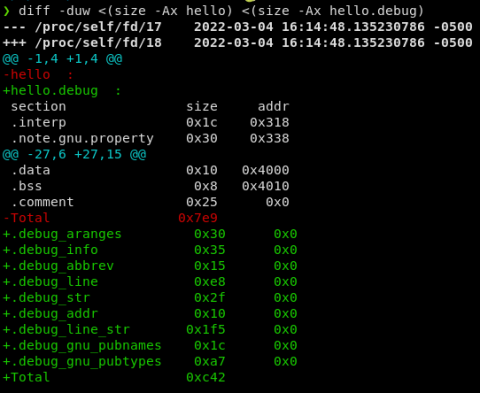
Large applications can produce very large symbol files when debug information is enabled (especially at the higher, more verbose levels of debug info!). This article describes some techniques for reducing debug symbol file sizes! Like Interrupt? Subscribe to get our latest posts straight to your mailbox.
We at Catchpoint are always striving to help our customers improve their products’ user experience, because, as we believe that “the experience is the point.” With a motto like that, you can bet we take the usability and effectiveness of our own platform very seriously, and are constantly striving to deliver a world-class user experience in the Catchpoint Portal. With that in mind, we have spent the better part of the last few years redesigning Catchpoint Portal from the ground up.
At Lightspeed, we maintain multiple large iOS projects as well as their modularized dependencies. The last year of acquisitions brought together many different approaches to CI/CD at our company. I recently led the initiative to bring these projects and practices into alignment. In this post, I will explain the goals we had for our continuous integration pipeline and the implementations we used to achieve them.
Android Manifest file is essential for any Android app, which contains specific information about your app, Android build tools, Google Play, device permissions, app launch information, operating system config and more. Every Android app must have an AndroidManifest.xml file in the directory structure. Android Manifest usually contains pre-defined or static information which is then used to run the app.
Atri Mandal, HEAL’s AI/ML expert, has written a second blog about the 4P strategy, this time primarily focusing on solution recommendation which gives useful suggestions to the SREs on how to fix problems pro-actively.
Network monitoring is a set of automatic processes that help to detect the status of each element of your network infrastructure. We are talking about routers, switches, access points, specific servers, intermediate network elements, and other related systems or applications (such as web servers, web applications, or database servers).In other words, network monitoring can be understood as taking a look at all the connected elements that are relevant to you or your organization.