Operations | Monitoring | ITSM | DevOps | Cloud

TL;DR InfluxDB Tech Tips: Converting InfluxQL Queries to Flux Queries

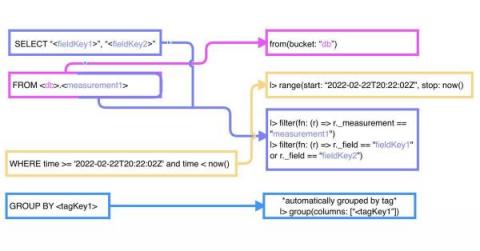
If you’re a 1.x user of InfluxDB, you’re most likely more familiar with InfluxQL than you are with Flux. To gain a deep understanding of Flux, it’s important to understand: However, you can still use Flux without studying those topics. In this TL;DR, we’ll convert common InfluxQL queries into Flux and identify patterns between the two languages to help you get started using Flux more easily if you come from a InfluxQL or SQL background.

Building Your Security Analytics Use Cases

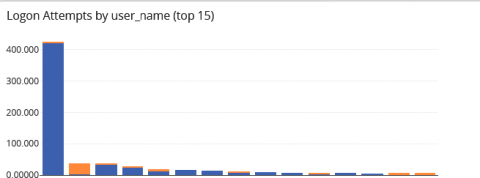
It’s time again for another meeting with senior leadership. You know that they will ask you the hard questions, like “how do you know that your detection and response times are ‘good enough’?” You think you’re doing a good job securing the organization. You haven’t had a security incident yet. At the same time, you also know that you have no way to prove your approach to security is working. You’re reading your threat intelligence feeds.

Heartbeat check and more - is your monitoring still alive?

SIGNL4 is a cloud-based mobile alerting and incident response service. Third-party systems like monitoring tools, control systems or IoT sensors detect abnormalities and transmit events to SIGNL4 over the Internet. What if your systems cannot transmit critical events anymore? That might happen when the Internet is down or when the tool itself has a problem. In this case, SIGNL4 would miss critical events and could not turn them into alert notifications to your IT admins, technicians and experts.

Announcing Prepress v2

Today I am very excited to announce a major new version of Cloud 66 Prepress, our No Ops tool for deploying static sites. Last year we released Prepress to help our customers deploy static sites to AWS S3. With support for Jekyll, Hugo, and Gatsby, Prepress is everything you need to deploy your static site to your account on all major cloud providers. Today, we are taking Prepress to a whole new level.

APIs for IT Monitoring Solutions

The majority of monitoring and management solutions used in enterprises provide their customers with APIs (Application Programming Interfaces) and a CLI to facilitate DevOps type workflows. With IaC (Infrastructure as Code) becoming de facto and ubiquitous, decent APIs have long been a must have on product evaluation checklists; there are of course a few exceptions – namely products aimed only at SMB (Small and Medium Business), immature startups, or freeware.

OpenStack Yoga on Ubuntu LTS delivers highly performant infrastructure for telcos and researchers with SmartNICs and DPUs

March 31, London – Canonical today announced the general availability of OpenStack Yoga on Ubuntu 22.04 Long Term Support (LTS) Beta and Ubuntu 20.04 LTS. This new version of OpenStack sets a foundation for next-generation, highly performant infrastructure as needed by telco NFV, media streaming, traffic analysis and HPC services, using SmartNIC cards and integrating them with the Neutron Open Virtual Network (OVN) driver.

Top Infrastructure Monitoring Tools and Best Practices

As more and more organizations adopt cloud-native technologies, the need to align business objectives and end-user experience with IT infrastructure’s availability and performance is ever-growing. This trend requires infrastructure monitoring setups to ensure that all of your systems are active and working together across your cloud environments, host operating systems, storage systems, etc.

Your First Dagger Kubernetes Deployment with Shipa

The DevOps and Platform Engineering space certainly is one that evolves fast. As new development paradigms get consumed, supporting the development pipeline is crucial. Pushing a public release of v0.2.x on March 30th, 2022, Dagger, from the creators of Docker, is another approach in portability and consistency in CI/CD pipelines. What the Docker Container has done applications, Dagger is hoping to achieve that with CI/CD pipelines.

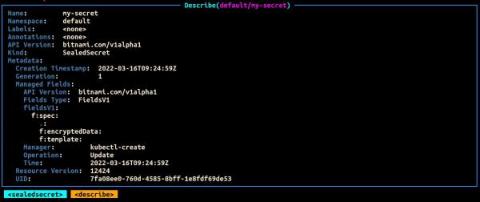
Managing Sensitive Data in Kubernetes with Sealed Secrets and External Secrets Operator (ESO)

Having multiple environments that can be dynamically configured has become akin to modern software development. This is especially true in an enterprise context where the software release cycles typically consist of separate compute environments like dev, stage and production. These environments are usually distinguished by data that drives the specific behavior of the application.