Operations | Monitoring | ITSM | DevOps | Cloud

Earn Money Playing Blockchain Games? What Are They and 5 Fun Recommendations for Beginners

Playing online games is not only a mere leisure activity, but a main job for some people. Working as a game player is not something odd or unheard of anymore. Some gamers generate more income than corporate workers. It’s true. For example, Johan Sundstein earns more than $7 million per month just for playing games. What a life! The most recent trend in the online gaming industry is blockchain games. They have received a lot of recognition for utilizing cryptography-based blockchain technologies.
Building resilience for applications and services with Elastic Observability

Insights from the 2022 Results That Matter study Correlating data across multiple silos and applications to derive meaningful and actionable insights is an ongoing struggle. These challenges are only set to increase as high-speed connectivity becomes more ubiquitous and enables data-heavy, digital experiences.

Top 15 Docker Container Monitoring tools in 2022

One of the easiest ways to see if the application running in our nodes is in an optimized state or not is by monitoring them. It is the last yet critical stage of any software development lifecycle. It opens up many possible improvements in your application, networking, IT automation, and other miscellaneous configurations. As we move towards microservice architecture, containerization and orchestration tools are rising. Containers are special processes that run in isolation from other processes.

4 ways to turn field service customers into fans

It’s January 1969, and the pressure is on. Paul, John, George, and Ringo have 17 days to write and record 14 songs. Peter Jackson’s epic documentary, “Get Back,” captures their creative process. We witness individual genius at work, but it’s when the Fab Four play together that we experience the magic of the Beatles. I think the same is true of field service. Our industry is full of talented individuals who are often under pressure.

The SolarWinds Platform and .NET: New Horizons With .NET Core

Like most large software development organizations, SolarWinds uses many programming languages to build our applications, including Go, Java, C++, Python, and more. The predominant language for our Orion® Platform is C#, based on Microsoft’s.NET Framework. As you are likely aware, the directions Microsoft has taken the.NET Framework over the past few years have created exciting new opportunities.

Investigating digital experience with Synthetic Transaction Monitoring

Kentik Synthetics is all about proactively testing and monitoring specific elements of your network, the services it relies on, and the applications it delivers. That means using artificial traffic instead of end-user traffic to test a variety of aspects of digital experience monitoring like device availability, DNS activity, web application page load times, and BGP activity. But to test an end-user’s experience interacting with a website, we need to approach things differently.

5 Downdetector Alternatives: Is There a Better Way to Know if a Service Is Down?

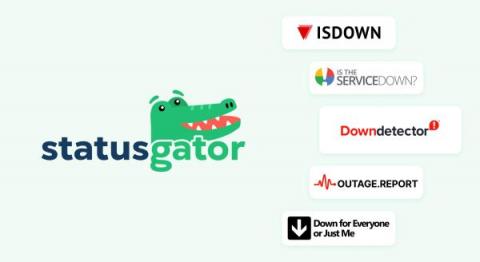
Downdetector is a platform that displays the current status of internet services, websites, mobile apps, and providers. The information is crowdsourced from users who report issues as they come across them. Downdetector is a popular service. Nowadays, organizations depend on a huge variety of services and so need to have the most reliable and detailed view of everything that’s going on.

Cloud Spend Is Now A Board-Level Issue, Survey Finds

According to Gartner, organizations spent $410.9 billion on cloud services in 2021. In the same year, executives estimated that as much as 30% of their cloud spend was wasted. That’s an aggregate $123.27 billion of waste — money that could go toward innovation, or that could help insulate companies from one of the worst market downturns in years. Organizations face a dilemma: The cloud is essential to modern business, and it’s only getting costlier.

How to access and query REST APIs with the Sqlyze plugin in Grafana

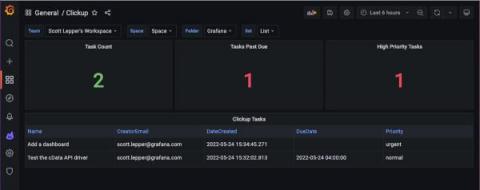
A few months ago, I wrote about using the Sqlyze data source plugin in Grafana to query COVID-19 wastewater surveillance data on Databricks. Did you know that with the Sqlyze Enterprise plugin, you can also access REST APIs (web services), treat them as database tables, and query them using SQL? You can use any ODBC driver you like, and it’s not limited to relational databases, either. You can query NoSQL and document databases, too.