Continuous integration/continuous delivery (CI/CD) tools give developers the ability to automate the software development process. As soon as developers push code to git, your CI/CD system can build, test, stage, integration test, deploy, and scale. That’s fantastic! In this tutorial, we will look at CircleCI orbs and how they can support your CI/CD practice. We’ll look at how to use multiple orbs and how orbs can help with multi-builds for a variety of application types.
Business objectives for IT management have fundamentally shifted. Traditionally, organizations imposed a heavy-hand over the types of IT resources their workers employ and how they will use them. However, over the past decade or so, a growing awareness has supplanted these antiquated approaches suggesting technology should conform to the needs of the workers, rather than the other way around.
When the first supporting server-side infrastructure for Collapsed Reply Threads (CRT) shipped with Mattermost v5.29 (November 2020), it included an ominous release note: > This setting is enabled by default and may affect server performance. While performance concerns are possible with any new feature, most features don’t require significant architecture and data model changes. Most features don’t ship incrementally across 20 monthly releases. And most features – to their credit?
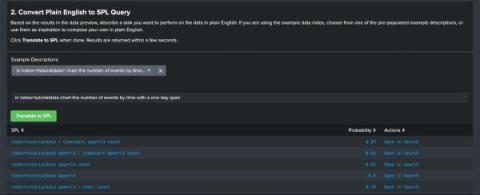
The Machine Learning team at Splunk has been hard at work over the last several months preparing for a few exciting launches at.conf22, held just a few weeks ago. Splunk customers want to leverage machine learning (ML) in their environments, but many aren’t sure how to use it, or even how to get started.
We announced Cribl Search in May, and customer reaction has been incredibly positive. We’ve heard for some time that organizations have data everywhere. They have data in their observability lakes, analytics tools, object stores, and at the edge. The big challenge facing enterprises is that existing search models require you to take all of this data that you don’t know is valuable or not, move it into one place, and then make decisions about whether this is valuable?
There is no escape from the need for patch management and updates. It is true that operating systems and software vendors are getting better, faster, and more efficient about how they make and deploy patches. However, for businesses, patch management remains a time-consuming necessity that has big impacts on security, compliance, and day-to-day operations for IT teams and the businesses they serve.