Operations | Monitoring | ITSM | DevOps | Cloud

How Grafana Alerting powers Torqata's data health scorecard system

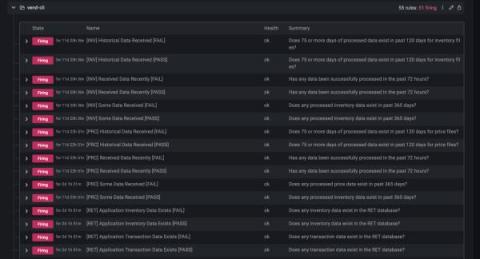
The tire sales industry is a fractured collection of hundreds of point of sales systems and thousands of auto shops and retailers. As a result, manufacturers and distributors lack critical visibility into how these products are sold. SaaS startup Torqata aims to fix that.


Maximizing Cost Efficiency with the JFrog Cloud DevOps Platform

As businesses strive to keep up with the speed of digital transformation, they’re turning to DevOps practices to help them automate the delivery of code changes. In a world where delivering secure quality software updates fast-drives business value, enter the JFrog Cloud DevOps Platform. The JFrog Platform unifies, accelerates, and secures your software delivery, from development to distribution.

A deep-dive into CI/CD: definitions and explanations of usage

Continuous integration and continuous delivery/deployment (CI/CD) pipelines are integral to software development and management nowadays, yet there seems to be a lot of confusion about what CI/CD actually is. In this article, learn about the definitions and explanations of CI/CD, the difference between CI and CD—and the difference between CI/CD and DevOps.

Application Performance Monitoring in the Gaming Industry

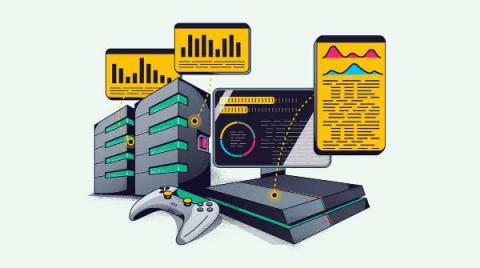
The gaming industry delivers specialized software at scale to users who expect a flawless interface. Application performance monitoring (APM) will measure critical software performance parameters using telemetry data. By monitoring this data, teams can ensure their game delivers the best user experience and quickly detect when the software needs updates to fix errors or meet key performance indicators (KPIs).

Sysdig Monitor introduces native support for Microsoft Azure Monitor

Microsoft Azure Monitor allows customers to get critical details about their Azure cloud environments and services. The API for Azure Monitor can be a great way for teams to pull this information into their own storage systems for further analysis. However, it can be an overwhelming amount of data to process. Sysdig can help with this problem and eliminate time and effort. Here is how we do it …

How to simplify the steps in the life cycle management of assets?

The life cycle of an asset starts from the day it is purchased to the day of its disposal. During this whole process, there are a lot of changes in the state, condition of asset and user history, depreciation being incurred and multiple other things. It is very important to keep a track of all of this so that an organization is well aware of the asset that they procure.

IT Asset Manager Job Description: Duties, Skills, and Daily Activities

IT asset managers’ job descriptions tend to be very complicated and diverse. In general terms, the role is in charge of managing an organization’s hardware and software assets, so it’s crucial to have a trustworthy professional, especially for organizations that conduct most of their operations on digital systems. In this sense, an IT asset manager has to also be capable of handling a team of professionals dedicated to the task to achieve the business goals with its assets.

An Overview of STIR/SHAKEN: What it is and Why it is Important

Receiving a phone call from an unfamiliar number—and deciding whether or not to answer that call—has become an increasingly pervasive problem for nearly everyone. Sophisticated robocalls and Caller ID spoofing are now a regular (albeit frustrating) part of consumers’ daily lives.

Best Practices for API Versioning

As your experience and knowledge of a system grow, change becomes inevitable. Your application requirements change, your bug fixes require code changes, and your APIs evolve. A key challenge in the software ecosystem is managing changes—especially when they concern APIs. Because you’re likely using APIs in multiple applications, you must document all updates and changes made to your APIs. This is where API versioning becomes crucial.

How Catchpoint's IPM Platform Detected Amazon's Two-Day Search Issue

Not all Internet outages take a website down. Some may impact a smaller subsection of users or only affect one part of a site’s functionality. Moreover, because of their relative “hidden” nature, organizations may not always know about them immediately since fewer users will be making complaints. However, such incidents can still have serious consequences, thus you want to detect them as soon as possible so you can quickly mitigate and resolve issues.