Operations | Monitoring | ITSM | DevOps | Cloud

Grafana 9.4 release: Easy data source setup, custom panels, Grafana Alerting updates, and more

Grafana 9.4 is here! Get Grafana 9.4 With the latest Grafana release, we’re introducing a wealth of new features and improvements that makes getting started with Grafana even easier and that take your visualizations and observability best practices to the next level. In addition to enabling TraceQL, the new query language for distributed tracing in Grafana Tempo 2.0, for all Grafana Cloud users, the Grafana 9.4 release comes with a fresh round of features.

Learn about CWDM vs DWDM

Meeting bandwidth capacity needs of customers is a crucial business objective for today’s providers. While both coarse wavelength-division multiplexing (CWDM) and dense wavelength-division multiplexing (DWDM) are modern forms of wavelength-division multiplexing (WDM) that effectively solve those increasing bandwidth needs by upgrading the utilization of new and existing fiber, they are each designed to tackle different network challenges.

CDMs for Enterprise Data: Canonical Data Model Explained

On their own, enterprise applications and systems are not always straightforward. Writ large, they are complex, integrated environments, full of multiple data formats and structures. You spend a great deal of effort and time to define and maintain diverse data models among these integrated components. A Canonical Data Model helps reduce that burden significantly — by promoting a standard and consistent data model between connecting components. This article describes a few things to get you started.

10 Ways to Optimize your Azure cost

In modern times, building and publishing an application has become very easy with Cloud-based deployment. Users don’t need to worry about infrastructure-related challenges like availability, reliability, scalability, etc. The cloud providers are responsible for keeping the deployment flow simple and intact. Providing many advantages and coherence, the high cost incurred for such benefits is the downside.

2 Steps to Confirm It's NOT Time to Change Your RMM

In my first two blogs in this series, I looked at some of the obvious signs and not so obvious signs that it might be time to change your RMM. However, the reality is that most MSPs don’t want to change unless they really have to, and in many of the cases I’ve seen they’re prepared to let things be bad for way too long.

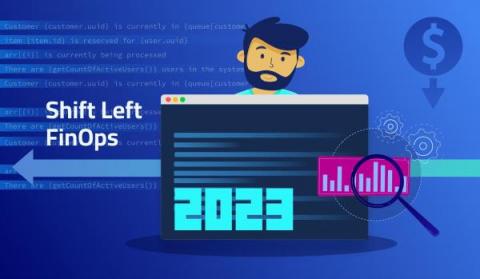
2023 is When More FinOps Practices will Shift Left and Cost Optimization around Logging will Get Central Stage

Effective troubleshooting and resolution of critical production issues require DevOps and R&D teams to utilize logging and observability. However, selecting the right logging solution can be challenging, given the wide range of available options and associated costs. Additionally, the strategy for logging usage should be tailored to the needs of different personas and use cases, such as DevOps engineers versus developers.

The 2023 Network IT Management Report Part 3: Extending Your Reach

This is the third in a four-part series focusing on the findings from our 2023 annual Field Report for IT Management. We surveyed 4500 IT professionals from internal IT teams and MSPs across North America to gauge where their organizations are heading from a network management perspective. In part three, we’ll discuss how organizations are thinking about extending the reach of their visibility and control over their networks with Wi-Fi and SaaS management.

The Ultimate Guide to SNMP

Simple Network Management Protocol (SNMP) is a basic network protocol designed to collect and report data from network devices connected to IP networks — even if the devices are different hardware and run different software. Most modems, routers, switches, servers, workstations, and printers will support SNMP communication. SNMP messages are transported via UDP on port 161.

Treat Application Performance Like A Feature

I, like many of you no doubt reading this, am an engineer with very strong opinions on how software should work. I am not interested in moving fast and breaking things; I am not interested in changing the world. I am interested in building pleasant, ergonomic software and charging money for it. My company, Buttondown, was born from that ethos.