Operations | Monitoring | ITSM | DevOps | Cloud

Avoiding Junk-Drawer Classes in Ruby

Because Ruby is an object-oriented language, we tend to model the world as a set of objects. We say that two integers (x and y) are a Point, and a Line has two of them. While this approach is often useful, it has one big problem. It privileges one interpretation of the data over all others. It assumes that x, and y will always be a Point and that you'll never need them to act as a Cell or Vector. What happens when you do need a Cell? Well, Point owns the data. So you add a your cell methods to Point.


6 Powerful PHP Frameworks To Work With In 2019

Creating a website from scratch requires a lot of work, which is often tedious. In several cases, you will need to recreate the functionalities that you have built thousands of times. This recreation of functions is equal to reinventing the wheel. This is where software frameworks come handy, you can utilize such frameworks as the foundation for you application and build your program upon it.

5 Best Practices for Getting the Most out of RUM

More than likely you’re here because you’ve made the leap or are thinking of making the leap in investing in a Real Monitoring Solution. Congrats. You’re one step closer to having the power of user metrics working in your favor. Real User Monitoring is a way for your users to communicate with you how satisfied they were when they interacted with your website or webapp, so how can you be sure you’re listening correctly?

Master IE11 Developer Tools in 2019

Internet Explorer 11 is an updated version of the IE web browser developed by Microsoft. And if previous versions saw you move to other browsers, then this article will help you reconsider. The previous versions of Internet Explorer didn’t have a developer-friendly browser, but vast improvement can be seen in its latest version. The built-in developer tools in IE11 now make developing and debugging code in the browser a simple task.

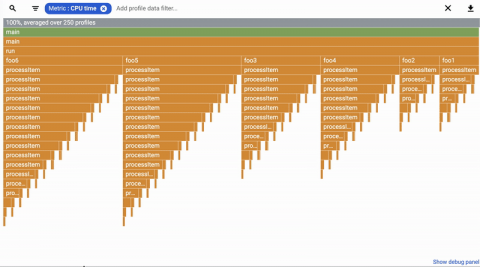
Stackdriver Profiler adds more languages and new analysis features

Historically, cloud developers have had limited visibility into the impact of their code changes. Profiling non-production deployments doesn’t yield useful results, and profiling tools used in production are typically expensive, with a performance impact that means that they can only be used briefly and on a small portion of the overall code base.

Prioritize Errors that Matter with Sentry + Jira Server

Bugs are dumb. They’re also inevitable. However annoying that may be, it’s more productive to accept the existence of bugs in our workflows than to panic-spiral every single time they pop up. Part of the acceptance process is keeping bugs (or at least the ones you care to fix) top of mind by paralleling your error monitoring and your sprint planning.

How to Monitor Azure VM Scale Sets

With Azure Virtual Machine (VM) Scale Sets you can automatically scale the number of VMs running an application based on the compute resources required. VM Scale Sets make it easier to deploy and manage a large number of Virtual Machines consistently and allow you to use and pay for the minimum resources needed at any given time, but they also introduce a few monitoring challenges.

Web Page Monitoring with Pandora FMS, Python and BeautifulSoup

Among my multiple occupations is also contributing to edit Wikipedia, and there is a wonderful article about Pandora FMS where it is stated that we can do a Web Page Monitoring to extract, for example, the value of Google actions and alert if they fall below a certain figure. That is still true today, although many things have changed!

What Could Your MSP Do With a Power-Up in 2019?

Imagine if your MSP business had an elite group of advisors—made up of some of the brightest minds in the business—standing by to give you advice. Decades of insight and expertise on tap, there to safely guide you around pitfalls and share success strategies that have worked for them. Imagine the kind of boost that might give you.

Keys to Curing Your Employees' Digital Workplace Woes

Unless end users (EUs) are directly prevented from using applications, they are unlikely to report IT anomalies or malfunctions; it’s much easier to restart a program or click “x” to make the error message disappear than submitting a ticket. Every day, employees settle for small IT glitches which never go reported, giving IT departments the perception of smooth service delivery while, in reality, EUs are experiencing constant obstacles and frustration.