Operations | Monitoring | ITSM | DevOps | Cloud

Ship features faster and safer with Datadog Feature Flags

Releasing new features is one of the highest-stakes moments in the software delivery life cycle. Even with CI/CD pipelines in place, plenty of things can still go wrong when a feature goes live for actual users. Most feature flagging tools operate in isolation from important observability tooling, forcing engineers to monitor changes across multiple disconnected systems to fully understand their impact. This slows down development and increases the chance of missing critical issues.

How to boost observability ROI with continuous profiling and Grafana Drilldown

For the longest time, observability was centered around logs, metrics, and traces, but the growth of more complex systems has made continuous profiling another essential part of maintaining healthy systems. It provides insights into resource usage and latency down to the code level, delivering key insights to improve performance.

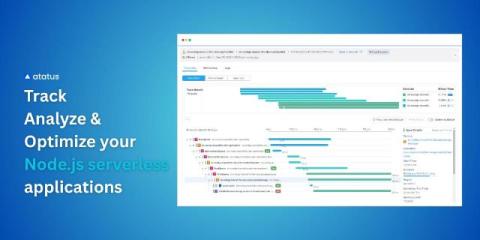
Node.js Monitoring in Serverless Environments - A Complete Guide

Serverless computing with Node.js is transforming how applications are built and scaled by removing the need to manage servers. However, serverless functions run for short durations and scale dynamically, making traditional monitoring ineffective. Effective monitoring is essential to track performance, detect errors, optimize cold starts, and control costs.

Docker Daemon Logs: How to Find, Read, and Use Them

Sometimes Docker behaves in ways that catch you off guard—containers don’t start as expected, images pause during pull, or networking takes longer than usual to respond. In those moments, the Docker daemon logs are your best reference point. These logs capture exactly what the Docker engine is doing at any given time. They give you a running account of system state, performance signals, and events that help you understand what’s happening beneath the surface.

Build on Your Microsoft SCOM Foundation

Enterprises that rely on Microsoft System Center Operations Manager (SCOM) as their monitoring backbone often share an everyday reality: the bigger the environment, the bigger the challenges. Noisy alert storms can bury critical issues. Management Packs (MPs) require ongoing care and expertise to deliver accurate insights. And without consistent reporting, teams risk slipping into reactive fire-fighting instead of strategic monitoring.

Model your architecture with custom entities in the Datadog Software Catalog

Every software organization has its own unique architecture and workflows. Beyond services and APIs, teams rely on internal libraries, CI/CD jobs, data pipelines, AI agents, and more to keep systems running smoothly. But as architectures grow more complex and interconnected, it can become difficult to keep track of all the structural dependencies and interactions in one place.

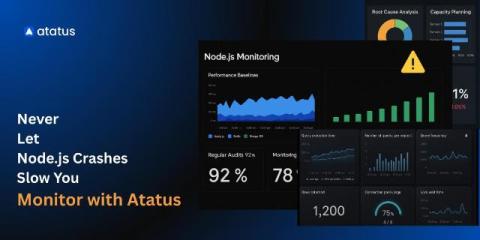
Why Does Your Node.js App Crash in Production and How Can You Fix it?

Node.js has become one of the most popular platforms for building scalable and high-performance web applications. Its event-driven, non-blocking I/O model allows developers to efficiently handle thousands of concurrent connections with minimal overhead. However, many businesses still face a critical challenge, Node.js applications often crash unexpectedly in production environments, causing downtime, lost revenue, and damage to brand reputation.

The telemetry time bomb - and what to do about it

Telemetry data is growing at an average of 29% a year — doubling costs every 18 months. That’s putting pressure on ITOps budgets, observability platforms, SecOps teams, and SIEM deployments alike. In this post, we’ll explore how unchecked data volumes, siloed tools, and aging architectures are creating a telemetry cost crunch that limits visibility, slows both troubleshooting and threat detection, and impacts business outcomes.