Operations | Monitoring | ITSM | DevOps | Cloud

Plugging Git Leaks: Preventing and Fixing Information Exposure in Repositories

Have you ever been neck-deep building a new feature? You're working at capacity. You need to test something out so you paste an API key into your source file with every intention of removing it later. But you forget. You push to GitHub. It's an easy mistake, and potentially a very expensive one. In this article, Julien Cretel explores the nuances of this kind of data leak, offers suggestions for recovery when leaks happen and gives us options for preventing them in the first place.

Step-by-step guide to setting up Prometheus Alertmanager with Slack, PagerDuty, and Gmail

In my previous blog post, “How to Explore Prometheus with Easy ‘Hello World’ Projects”, I described three projects that I used to get a better sense of what Prometheus can do. In this post, I’d like to share how I got more familiar with Prometheus Alertmanager and how I set up alert notifications for Slack, PagerDuty, and Gmail.

Get More From Sentry With Our PagerDuty Integration

Much like the pagers of yore, PagerDuty immediately notifies the right person when something goes wrong. That means that no matter when there’s an issue in your application, the right people on your team will hear about it. But as much as we love PagerDuty, we’re not using valuable company time and resources just to tell you about it. We are, however, using valuable company time and resources to tell you all about our new integration with PagerDuty.

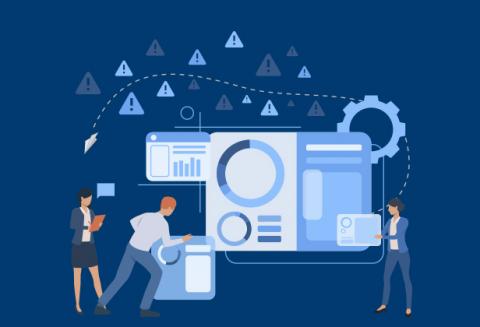
Why would Modern Businesses need Event Correlation?

Network management is undoubtedly crucial as there is a constant need to pin-point as well as fix the issues quickly whether it’s on premise or on cloud. The more complex and distributed a network becomes, the more alarms or alerts the system generates. Just knowing that something has gone wrong in your network is not enough, you should know the details like why it happened, when it happened, where it started, and what triggered it.

Migrating Production Data in Elixir

When requirements change for your product, there arises a need to change not only the codebase but also the existing data that already lives in production. If you’re performing the changes locally, the whole process seems fairly simple. You test your new feature against a sparkling clean database, the test suite is green, and the feature looks great. Then you deploy, and everything goes to hell because you forgot that production was in a slightly different state.

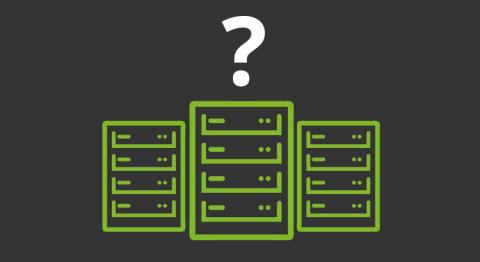
What are racks and which one should you buy?

A rack is a structure, usually made out of metal and cabinet or wall-shaped, which allows to store and organize the different components of computer installations, such as servers, storage systems, switches, etc. Is that it? Are you disappointed? Well, hold on, although they don’t seem like much, the world of racks can actually be quite tricky.

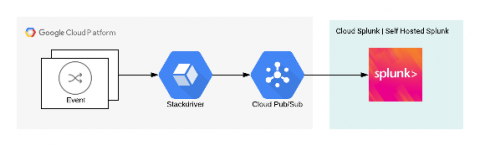
Stackdriver Push to Splunk

During my career (in technology), I have dealt with many clients to whom security was one of the main areas of concern. As such, there’s always room for improvement but without a shed of a doubt, communications direction and stateful firewalls are some of the very first elements to consider. When it comes to logging and audit information, as a rule of thumb, it’s good to have a log aggregator stored outside of the scope of a cloud provider. A great log correlation out there is Splunk.

Monitor Apache Airflow with Datadog

Apache Airflow is an open source system for programmatically creating, scheduling, and monitoring complex workflows including data processing pipelines. Originally developed by Airbnb in 2014, Airflow is now a part of the Apache Software Foundation and has an active community of contributing developers. Airflow represents workflows as Directed Acyclic Graphs (DAGs), which are made up of tasks written in Python. This allows Airflow users to programmatically build and modify their workflows.