Many of the world’s largest businesses use eG Innovations’ solutions to enhance IT service performance, increase operational efficiency, ensure IT effectiveness, and deliver on the ROI promise of transformational IT investments across physical, virtual, and cloud environments. But what role will they play in the future of work? And how are Citrix and eG working together?
Microsoft Monitoring health and usage information is a critical maintenance task for any site or application, whether it’s running in your on-premises datacenter, hybrid or public cloud environment, or hosted environment. Today’s challenge is that enterprises still require end-to-end monitoring insights of their running (and not running) application workloads, while also knowing that they are losing ground on the physical characteristics of managing their own datacenters.
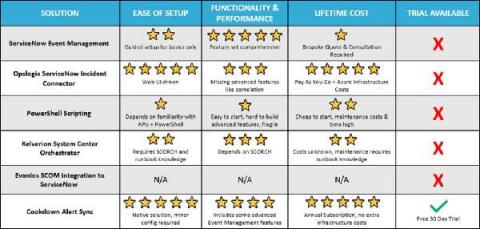
Firstly, let’s look at why it is so valuable to integrate SCOM and ServiceNow. There are lots of tools available to help you integrate SCOM and ServiceNow. So, the next step is to understand which one will provide your business with the best solution. To help you work through this decision we recommend you ask yourself the following questions.
Before talking about integration, let’s take a look at your non-automated Service Management processes. There isn’t a right or wrong answer as this varies based on your needs, think through the below questions to get a perspective on how tasks flow within your company today.
In my prior two blog posts, we focused on creating a bunch of Enterprise Applications (EAs), tagging those EAs, and then updating the Status dashboard to only show those EAs that are Critical Service Offerings (CSO). For this blog post, we will create some relationships and demonstrate how alerting behaves using SquaredUp's Manual Reporting Availability functionality available in the EAM tier of the product. For this post, we're going to do amazing stuff!
Here at Datadog, we have always strived to build monitoring tools that are robust yet flexible. We are committed to continued innovation, and we believe that when it comes to creating new solutions that complement our customers' existing workflows, our work is never done. That’s why we’re excited to announce that Timber Technologies, the company behind Vector, is joining Datadog.
What are the ideal server room temperature and humidity levels where you store your servers? This is an important question you should know the answer to whether you are responsible for managing racks of servers or a small business owner with a single server. Servers house your data, files, and other information to make it easily accessible from any connected workstation. If the server room gets too hot or too humid, it can cause your servers to overheat and fail.
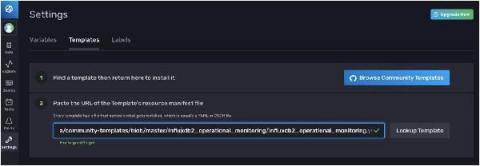
If you didn’t already know, one of the perks of InfluxDB 2.0 is having access to templates. InfluxDB templates allow you to easily apply a variety of preconfigured resources including Telegraf configurations, buckets, dashboard, tasks, and alerts to your InfluxDB instance. In this TL;DR we’ll walk through the easiest way to use and create a template.
The days of the one-size-fits-all IT strategy are over. Employees have higher expectations for their workplace experience than ever before – which leads to growing tension when their unique needs are not met by IT. The only solution is a full embrace of personalized, right-sized IT services. Delivering consistent personalized service is easier said than done, however. Organizations must first develop a comprehensive understanding of their employees.