Operations | Monitoring | ITSM | DevOps | Cloud

5 Most Common API Errors and How to Fix Them

As software got more complex, more and more software projects rely on API integrations to run. Some of the most common API use cases involve pulling in external data that’s crucial to the function of your application. This includes weather data, financial data, or even syncing with another service your customer wants to share data with. However, the risk with API development lies in the interaction with code you didn’t write—and usually cannot see—that needs debugging.

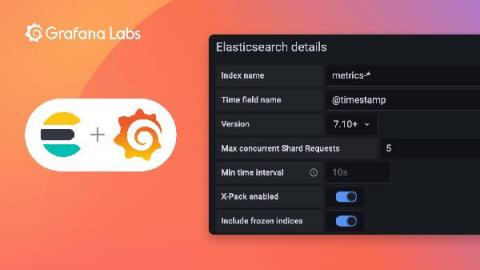
How we're working with the Elastic team to make the Elasticsearch data source for Grafana even more powerful

Back in March, we announced that Grafana Labs was partnering with Elastic to build an official Elasticsearch plugin for Grafana. As our CEO Raj Dutt wrote at the time, our “big tent” philosophy “means that we want to support data sources that our users are passionate about. Elasticsearch is one of the most popular data platforms that can be visualized in Grafana.”

Logging and Monitoring: A Match Made in Software Heaven

All code and no logging makes your application a black box system. Similarly, all logging and no monitoring makes analyzing performance complicated and inconvenient. The goal is to achieve better visibility into the operations of your application, its status, performance, and overall health. Making this information easily accessible presents more context about the critical incidents and surfaces actionable insights for optimizing performance.

Announcing our $55M Series C Round Funding to further our storage-less data vision

It’s been an exciting year here at Coralogix. We welcomed our 2,000th customer (more than doubling our customer base) and almost tripled our revenue. We also announced our Series B Funding and started to scale our R&D teams and go-to-market strategy. Most exciting, though, was last September when we launched Streamaⓒ – our stateful streaming analytics pipeline. And the excitement continues!

NiCE Log File Monitor Management Pack 2.0 for Microsoft SCOM

The NiCE Log File Monitor Management Pack 2.0 is a FREE solution supporting the SCOM Community in next-level log file analysis. It helps IT performance and security data analysts identify errors causing transactions and queries to take too long or not run at all. Software-related bugs, security issues, or erroneous configurations that impact website or application performance are figured out quickly by employing improved templates for alert rules, performance rules, or monitors.

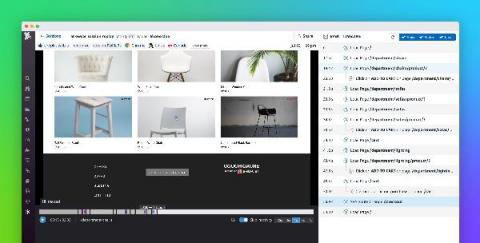
Use Datadog Session Replay to view real-time user journeys

When developing large, customer-facing applications, it’s paramount to have visibility into real user behavior in order to optimize your UX. Without a direct view into what users are actually doing when navigating your app, it can be difficult to reproduce bugs and understand how aspects of your frontend design are causing user frustration and churn. With Datadog RUM’s Session Replay feature, currently available in beta, you can watch individual user sessions using a video-like interface.

Boosting performance with network monitoring solutions

Technological advances and emerging networking concepts are constantly shaping our IT infrastructure. Networks are no longer limited to traditional networking constraints such as its static nature, but are continually evolving to improve efficiency by spanning across wired, wireless, virtual, and hybrid IT environments. This IT evolution drives organizations to advance digitally and support computational requirements to meet their business objectives.

How to monitor Cassandra database clusters

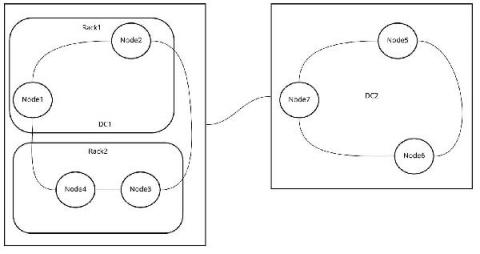
Apache Cassandra is an open-source distributed NoSQL database management system that was released by Facebook almost 12 years ago. It’s designed to handle vast amounts of data, with high availability and no single point of failure. It is a wide-column store, meaning that it organizes related facts into columns. Columns are grouped into “column families.” The benefit is that you can manage data that just won’t fit on one computer.

Monitoring Kubernetes the Elastic way using Filebeat and Metricbeat

In my previous blog post, I demonstrated how to use Prometheus and Fluentd with the Elastic Stack to monitor Kubernetes. That’s a good option if you’re already using those open source-based monitoring tools in your organization. But, if you’re new to Kubernetes monitoring, or want to take full advantage of Elastic Observability, there is an easier and more comprehensive way. In this blog, we will explore how to monitor Kubernetes the Elastic way: using Filebeat and Metricbeat.