Operations | Monitoring | ITSM | DevOps | Cloud

FinOps Strategy for Hybrid IT: Interview with Tim Conley

FinOps continues to grow in importance as organizations balance cloud services with on-prem systems, legacy applications, and evolving business demands. Many teams want to manage their costs more effectively but are unsure how to apply a FinOps strategy for hybrid IT outside the cloud.

How To Enable Real-Time Endpoint Visibility for L1 Support:

In today’s digital workplace, speed and precision in IT support can make or break the employee experience. Long resolution times, repetitive troubleshooting, and lack of visibility often frustrate both users and support teams. That’s where Nexthink comes in—bringing powerful capabilities like Amplify, Device View,and Assist to transform how Service Desk teams operate.

Monitor Temporal Workflows seamlessly: Introducing the Temporal Cloud integration for Grafana Cloud

Nishad Krishnan is a Software Engineer at Temporal Technologies, where he’s focused on observability and making the “unknown unknowns” slightly less unknown. At Temporal Technologies, our goal is to make it easier for developers to build and operate reliable, scalable applications without sacrificing productivity. Our platform, Temporal, helps ensure that code runs to completion once started, no matter how long it takes or what failures occur along the way.

Mezmo + Catchpoint deliver observability SREs can rely on

For SREs juggling multiple services, third-party dependencies, and constant alerts, a critical service slowdown can quickly turn into chaos. APM Dashboards may show everything is fine, yet users are still experiencing problems. That gap—between application telemetry and real-world performance—can turn a five-minute fix into a two-hour war room. ‍

Build custom apps in seconds with conversational AI in App Builder

Datadog App Builder is a low-code tool for creating internal apps, making use of a drag-and-drop interface that allows engineering teams to troubleshoot issues, optimize operations, and enable self-service while connecting directly to their Datadog data and permissions. Now, with conversational AI, teams can go from idea to working prototype even faster.

What's Special About MCP?

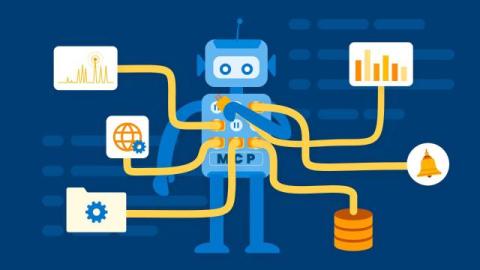
AI agents can interact with the world using tools. Those tools can be generic or specific. For example: Generic: Specific: The most general ones, like “run a bash command” and “read and write files” are built into the agent. More specific ones are provided through Model Control Protocol (MCP) servers. Every tool provided to the agent comes with instructions sent as part of the context.

Installing TrackJS on Certkit

I recorded a video showing how to properly set up TrackJS for a new production website, specifically CertKit, our new certificate lifecycle management tool. The key to effective error monitoring isn’t just installing the tracking snippet, it’s configuring the system to surface real issues while filtering out the noise. I configure a forwarding domain (errors.certkit.io) to bypass ad blockers that might prevent error reporting.

<100ms E-commerce: Instant loads with Speculation Rules API

In e-commerce, we all know that speed = money. I know it, you know it, Amazon knows it, eBay knows it, Shopify knows it, everyone knows it. In this article we’ll see how we can improve the perceived performance of our site’s critical pages, like the Product Details page, the Cart page, the Checkout page. We’re going to use the Speculation Rules API (SRA) to prerender/prefetch them, and also explain how certain frameworks like Next.js offer their own prefetching mechanisms.

Eliminating N+1 Queries with Seer's Automated Root Cause Analysis

When I was working at Shopify, Black Friday and Cyber Monday were our Superbowl. We initiated code-freeze weeks before to make sure merchants wouldn't have any unexpected issues during one of the most important times of the year. Sometimes, though, you need to ship updates last minute. Picture this: It's Black Friday Eve, 11:47 PM. You've just deployed a new /sale page with 50+ products at discounted prices. Marketing is about to email 500,000 subscribers. Everything tested fine with your sample data.

Side-by-Side Variable Comparison for Snapshot Debugging

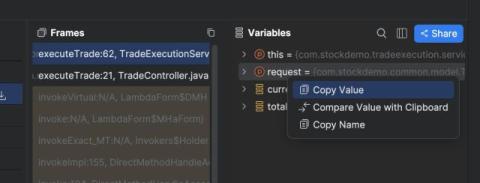
When you’re debugging a tricky issue in a distributed system, “what changed?” is often the most important question. You add logs, you capture data, you redeploy, and suddenly your browser is full of open tabs, copied JSON blobs, and screenshots of log lines. Comparing behavior between two requests, two users, or two releases turns into a manual, error-prone chore. Lightrun Snapshots were built to fix the data collection side of that story.