Operations | Monitoring | ITSM | DevOps | Cloud

9 Tools and Integrations for InfluxDB

InfluxDB is the go-to database for developers working with high-velocity time series data for use cases like application performance monitoring and real-time analytics. But InfluxDB exhibits its true power when combined with the right tools and integrations. The tools covered in this blog post can help at all stages of your workflow, from data collection to visualization and analysis, so you can get the most out of your InfluxDB deployment.

Why Indoor Air Quality Declines Quickly When Mold Goes Untreated

Mold growth inside a home is more than an unpleasant sight, it can dramatically reduce indoor air quality in a surprisingly short amount of time. When mold spores multiply, they spread through the air and settle into various areas of the house, creating an environment that becomes increasingly difficult to live in comfortably. As mold thrives in warm, damp, and poorly ventilated spaces, even a small patch can spread rapidly if ignored. Understanding how and why air quality declines helps homeowners act early, protect their health, and prevent serious structural problems.

Building high performance dashboards with SquaredUp and ClickHouse

ClickHouse is redefining the boundaries of analytical database performance. Trusted by hyperscalers like Netflix, OpenAI, and Disney, it delivers sub-second query responses on billions of rows and scales seamlessly to petabyte workloads. The great news is that it is open source, so this power is available to everyone. You can spin up a local instance running in a Docker container in a matter of seconds.

Instrument Jenkins With OpenTelemetry

You can instrument Jenkins with OpenTelemetry using the official plugin and an OpenTelemetry Collector, then send the data to a backend like Last9 to understand where pipeline latency and failures actually originate. Jenkins provides job status and console logs, but it doesn't show how time is distributed across stages, agents, plugins, and external systems. OpenTelemetry fills that gap by emitting traces, metrics, and logs in a standard format that any OTLP-compatible backend can process.

Amazon AppStream 2.0 Multi-session Service Monitoring

In late 2023, Amazon introduced the ability to deliver AppStream 2.0 using Microsoft Windows Server OS rather than the desktop of the OS. This feature enables IT admins to host multiple end-user sessions on a single AppStream 2.0 instance, helping to make better use of instance resources.

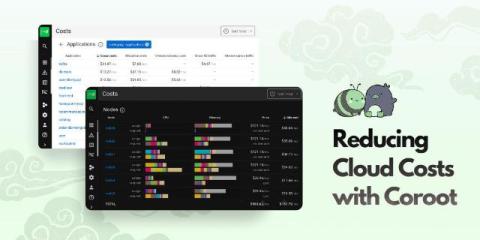
How to Reduce Your Cloud Costs with Coroot

Cloud costs often grow quietly until they suddenly command everyone’s attention. Gartner estimates that companies overspend on cloud services by up to 70 percent, mostly because they lack clear visibility into where the money is actually being spent. Cloud invoices speak the language of infrastructure: nodes, instance types, regions, volumes, and egress. Engineering teams speak the language of services, deployments, and code.

Golang Monitoring Guide - Traces, Logs, APM and Go Runtime Metrics

Golang (Go) applications are known for their high performance, concurrency model, and efficient resource use, making Go an easy choice for building modern distributed systems. But just because your Go application is built for speed doesn't mean it's running perfectly in production. When things go wrong, just checking if your service is "UP" isn't enough.

In the age of AI, measurement becomes our superpower

The last few years have felt less like a product roadmap and more like a scene from science fiction. Artificial intelligence didn’t simply arrive, it erupted. In what feels like a blink, we’re building software by prompting instead of programming. Our words now generate code, compose music, translate languages, and create entire digital experiences.

New features: Introducing Metrics Usage and Query Usage analyzers

As teams grow and telemetry scales, it becomes harder to keep track of which metrics matter. Labels pile up, cardinality increases, and costs start rising faster than anyone expected. At the same time, dashboards often stay quiet and alerts go untouched. The truth is, most teams don’t actually know how and how much of their metric data is being used, let alone which metrics are driving cost. This is exactly the problem we set out to solve.