Operations | Monitoring | ITSM | DevOps | Cloud

Top 10 Questions About Uptime Monitoring

Monitoring for uptime is becoming increasingly necessary as SaaS and Always-On services integrate deeper with our professional and personal lives. When bottom lines and infrastructure requirements are tied so closely to 24/7 accessibility, making sure your websites are UP becomes priority one. We’ve scoured our support tickets, talked to our users, and kept an ear to the ground to compile the top 10 questions surrounding uptime monitoring and break down the answers.

Datadog vs. Grafana: Compare Use Cases and Features

The current big data world allows even tiny IT environments to produce massive amounts of information. After determining how to open up various data generation sources, a business analyzes the information. Here, the analysis method you leverage varies depending on the data, the tools/equipment used, and the use case. A good practice is to visualize the traces, weather logs, data, or metrics.

What is Distributed Network Monitoring for SaaS and SD-WAN

Nowadays, companies are embracing flexibility. Many businesses are embracing remote offices and working from home, storing their data in the Cloud, ditching centralized data infrastructures, and moving towards networks using SaaS and SD-WAN. With distributed architectures becoming the new normal, it’s important to have a distributed monitoring solution that can keep up. In this article, we’re running you through everything you need to know about how distributed network monitoring works.

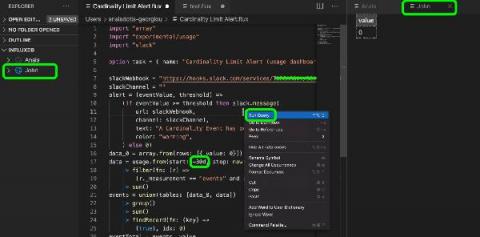
Using the Flux VS Code Extension for IoT Application Development

InfluxData prides itself on its effort to prioritize developer happiness. This included providing developers with a variety of tools to interact with InfluxDB v2 OSS or InfluxDB Cloud, so they can pick the development style that works best for them. This article assumes you’re using the InfluxDB Cloud Free tier, which is the easiest way to get started and maintain InfluxDB. You can use any of the following tools for your IoT application development.

Comparing gRPC performance across different technologies

gRPC is an open-source Remote Procedure Call system focusing on high performance. There exist several gRPC benchmarks including an official one, yet we still wanted to create our own. Why would we torture ourselves doing such a thing? So with those points in mind, we created a completely open-source benchmark where everyone is welcome to contribute and which could be run with a single command, having only Docker as a prerequisite.

Splunk Delivers Real-Time Salesforce Visibility with New Streaming API Integration

You might already be using Splunk to manage your Salesforce environment with the help of the Splunk App for Salesforce and the Splunk Add-on for Salesforce that allows a Splunk administrator to collect different types of data from Salesforce using REST APIs. This solution is great and the events give you an idea of how users interact with Salesforce. These events can range from Apex executions to page views.

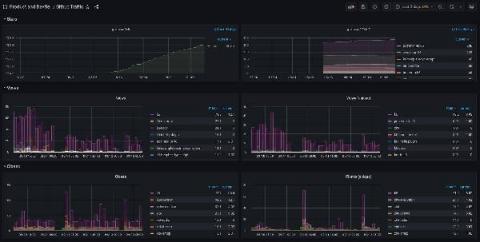
How we use Grafana and Prometheus to monitor the traffic of our many GitHub repositories

If you want to understand the popularity of your GitHub repositories, knowing the number of stars isn’t enough. GitHub understands this, and that’s why the team released traffic insights. Anyone with push access to a repository can view these insights, which include: full clones, visitors from the past 14 days, referring sites, and popular content in the traffic graph.

Model-driven observability: Embedded Alert Rules

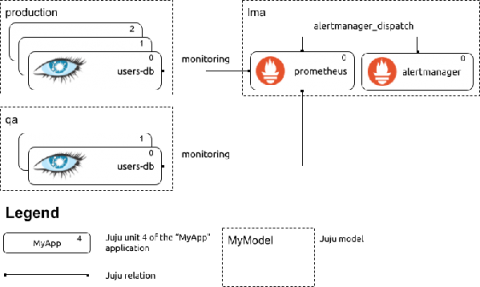
This post is about alert rules. Operators should ensure a baseline of observability for the software they operate. In this blog post, we cover Prometheus alert rules, how they work and their gotchas, and discuss how Prometheus alert rules can be embedded in Juju charms and how Juju topology enables the scoping of embedded alert rules to avoid inaccuracies.