Achieving cost savings is one of the main drivers for cloud adoption. But for most companies, controlling cloud spend is much more challenging than anticipated. In a recent survey, 94% of IT decision makers report they are overspending in the cloud. Our own survey on cloud costs revealed 90% of executives say better cloud cost management and cost reduction is a top priority.
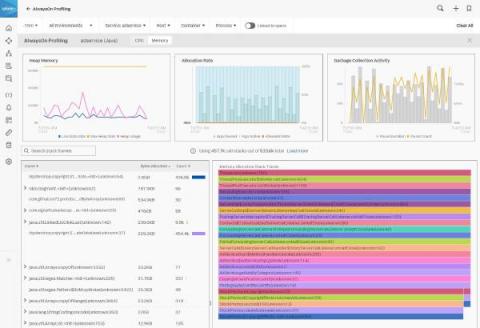
We’re excited to share new Splunk capabilities to help measure how code performance impacts your services. Splunk APM’s AlwaysOn Profiling now supports.NET and Node.js applications for CPU profiling, and Java applications for memory profiling. AlwaysOn Profiling gives app developers and service owners code level visibility into resource bottlenecks by continuously profiling service performance, at minimal overhead.
Microservices have grown to become one of the most optimal alternatives to monoliths. However, just building your app and releasing it to the public isn’t everything. Monitoring microservices is as important as building and releasing them. You need to maintain it to resolve issues that may occur and also introduce new features from time to time.
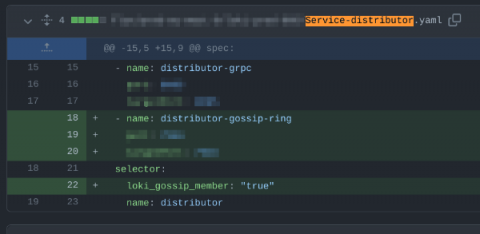
Hello, I’m Callum. I work on Grafana Loki, including the hosted Grafana Cloud Logs offering. Grafana Loki is a distributed multi-tenant system for storing log data — ingestion, querying, all that fun stuff. It also powers Grafana Cloud Logs.
We’ve got a lot of OpenTelemetry-flavored honey to send your way, ranging from OpenTelemetry SDK distribution updates to protocol support. We now support OpenTelemetry logs, released a new SDK distribution for OpenTelemetry Go, and have some updates around OpenTelemetry + Honeycomb to share. Let’s see what all the buzz is about this time! 🐝🐝
Companies must effectively monitor their assets and networks in today's competitive setting, get the most significant result, and react swiftly to problems. However, such a situation is unusual with companies that continue to run in a traditional, isolated setting. These companies frequently don't have precise asset performance tracking procedures.
For the past 25 years, I’ve been monitoring networks, applications, services, basically anything digital on a quest to understand “when is it safe to cross the road”! We all know, just blindly crossing a road is EXTREMELY dangerous!
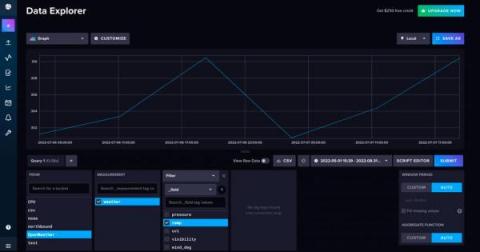
In this tutorial we’ll learn how to use Python to get time series data from the OpenWeatherMap API and convert it to a Pandas DataFrame. Next we’ll write that data to InfluxDB, a time-series data platform, with the InfluxDB Python Client. We’ll convert the JSON response from our API call to a Pandas DataFrame because I find that that’s the easiest way to write data to InfluxDB.