Operations | Monitoring | ITSM | DevOps | Cloud

Automatically Convert Grafana Dashboards from InfluxQL to PromQL with a New Open Source Tool

It’s monitoring time. We all collect metrics from our system and applications to monitor their health, availability and performance. Our metrics are essentially time-series data collected from various endpoints. Then, it is stored in time series specialized databases, and then visualized in the metrics graphs we all know and love.
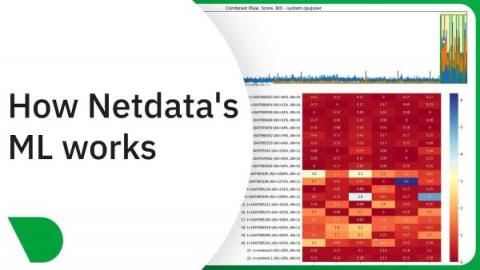
How Netdata's Machine Learning works

Following on from the recent launch of our Anomaly Advisor feature, and in keeping with our approach to machine learning, here is a detailed Python notebook outlining exactly how the machine learning powering the Anomaly Advisor actually works under the hood. Or if you’d rather watch a video walkthrough of the notebook then check out below. Try it for yourself, get started by signing in to Netdata and connecting a node.

How to get started with the new Grafana Ansible collection for Grafana Cloud

More than 20,000 companies around the world use Ansible as their Infrastructure as Code and configuration management tool. With the rising popularity towards managing infrastructure using IaC and config management tools, Ansible is one of the best open source tools to choose from. That is why we are excited to announce a new Grafana Ansible collection available to all Grafana Cloud users, including those in the generous free tier.

Tracing and Observing AWS ECS

It’s no secret that application containerization has revolutionized the digital world as we know it by providing a transient gateway into elastic infrastructure that can scale and grow as needed. Where traditional virtualization was all about creating a single homogenous entity, containers are self-contained units of software, able to run in just about any environment, making them extremely portable.

Ask Miss O11y: How Can I Convince My Organization to Invest in Instrumenting for Observability?

We recently hosted a Twitter Space, and a question came in regarding speaking to executives about instrumenting for observability. It’s a great topic we love expanding on. Here’s the answer we provided.

What is a Data Warehouse? Benefits and Tips

A data warehouse (DW) is a centralized repository of data integrated from multiple systems.. This data is often cleansed and standardized before being loaded. Designed to support analytical workloads, a data warehouse can help organizations better leverage both current data and historical data to improve decision-making through the analysis of business processes and outcomes.

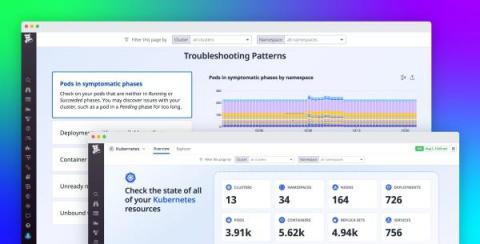
Equip any user to monitor Kubernetes with the Overview Page

Many organizations use Kubernetes to orchestrate their containerized applications. But because Kubernetes is complex, application developers may take some time to ramp up on the intricacies of monitoring a Kubernetes environment. This means that teams often need to create internal documentation and offer hands-on training to bridge the knowledge gap.

NiCE Active 365 Management Pack 4.1 released

Microsoft 365 services help companies worldwide improve business and revenue by providing best in class digital workspace experience. The NiCE Active 365 Management Pack complements this by advanced M365 monitoring such as full Teams Call analysis integrated into Microsoft SCOM. Advanced monitoring and analytics help you reveal unwanted micro-events influencing the health and performance of the system and its users.

Maintaining High-Velocity Feature Development, Without Sacrificing Quality

As in any high-growth environment, expanding your suite of products and capabilities can contribute to a growing backlog of errors, and challenges prioritizing them… a scenario not lost on the team at Airtable, a connected apps platform that more than 300k organizations, including 80% of the Fortune 100, rely on to connect their teams, data, and workflows. To support organizations like Amazon and IBM, Airtable ships new features and updates through multiple deployments a week.