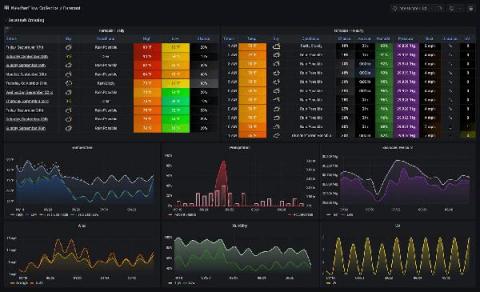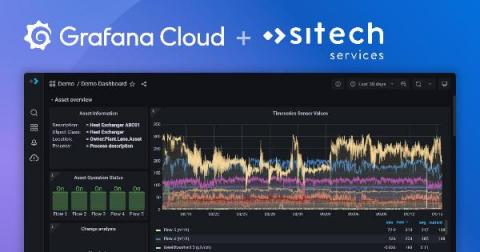
The AWS IoT SiteWise plugin for Grafana was created to enable AWS IoT SiteWise customers to visualize and monitor industrial equipment data using Grafana dashboards. Industrial customers use AWS IoT SiteWise to collect, process, and monitor their industrial data at scale. This plugin allows them to use Grafana dashboards to monitor this data, stored by AWS IoT SiteWise in the AWS Cloud.
Newlib is a very popular libc targeting embedded systems. It’s the libc that ships with the GNU Arm Embedded Toolchain published by ARM. This article takes a look at one of the commonly used functions provided by the Newlib C library: memcpy. We’ll examine the default nano implementation and the performance implications, comparing it against the faster non-default implementation. Like Interrupt? Subscribe to get our latest posts straight to your mailbox.
Here are the articles, videos, and tools that we’ve been excited about this July and August. We hope you enjoy these links, and we look forward to hearing what you’ve been reading in the comments or on the Interrupt Slack.
Internet Of Things has always played a significant role in the retail industry, stocking and warehousing. And its value is projected to rise from USD 14.5 billion in 2020 to USD 35.5 billion by 2025, at a CAGR of 19.6% The term Internet of Things was coined by Kevin Ashton when he was faced with a challenge in logistics and supply chain management while he co-founded the MIT Auto-CAD centre.
Data is at the heart of every business today. But if we don’t understand the data or if the data isn’t accessible, it doesn’t do us much good. More important than the data itself is having the right data in the hands of the right people who can execute at the right time. This need has given rise to edge computing, which helps businesses glean insights from data by processing it as close to the source as possible.
Canonical and DFI announce that the GHF51 and EC90A-GH, have been certified, based on the latest AMD-based platform. Both offer improved performance, a smaller footprint, and full access to open-source software with Ubuntu and Ubuntu Core. These are part of the first wave of products that passed the Ubuntu IoT hardware certification.
A typical IoT application with any physical system or process in the field can have hundreds of on-site sensors generating copious amounts of data every second and possibly communicating in several different protocols.