The latest News and Information on DevOps, CI/CD, Automation and related technologies.
DevOps and SRE teams are under intense pressure to reduce the mean time to recovery (MTTR) when resolving incidents. With the proliferation of cloud services and the increasing complexity of DevOps toolchains, engineers today need to not only learn how to use these services, but also troubleshoot them when an incident is raised at 2 a.m. The problem is, many incident response processes are still manual today—cobbling together runbooks and ad hoc scripts and orchestrating people to respond.
Legacy monitoring tools fall short for SRE teams and DevOps pros tasked with maintaining uptime of key applications in modern, cloud-based IT systems. To have visibility and control over these environments, these teams must collect and analyze more granular, underlying system information — observability data. This article explains why the only way for SRE teams and DevOps pros to extract the necessary insights from this data is through the application of AI capabilities.
Continuous integration and continuous delivery (CI/CD) pipelines have become fundamental to modern software development and code deployment. Implementing CI/CD practices can let teams deploy code more quickly and efficiently. But with these methods come a number of new challenges: bad code deploys are a major source of downtime and can lead to a loss of revenue and customer trust.
"A long time ago in a data centre far, far away.... Our first episode takes us back to the early days of launching Civo, where we had a fledgling Ceph cluster with a bunch of SSDs in each. Those were darker times, in the early days of OpenStack. As time went by the cluster grew, new bigger nodes were added along with bigger disks.
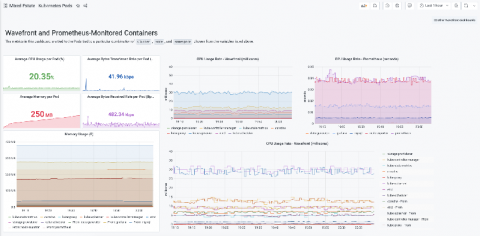
In early 2020, the Wavefront team was merged into the newly formed “Tanzu” portfolio under VMware’s Modern Applications business unit.