Mailchimp
Not subscribed to OpsMatters Newsletter


Amazon recently announced the rollout of their new AWS Savings Plans, a new way to reduce your cloud compute costs. These allow you to achieve the discounts associated with their popular Reserved Instances (up to 72% off on-demand pricing) without having to engage in the headache of managing the same. With the new plans, you would commit to a particular hourly spend of your choosing on either a 1 year or 3 year fixed term.
Honeycomb now offers SLOs, aka Service Level Objectives. This is the second in a set of of essays on creating SLOs from first principles. Previously, in this series, we created a derived column to show how a back-end service was doing. That column categorized every incoming event as passing, failing, or irrelevant. We then counted up the column over time to see how many events passed and failed. But we had a problem: we were doing far too much math ourselves.
When it comes to having visibility and detecting threats on macOS, one of the best sources of information for file system events, process events, and network events is the kernel. MacOS kernel extensions provide the ability to receive data about these events in real time with great detail. This is good for providing quick visibility into detecting anomalies and identifying possible threats.
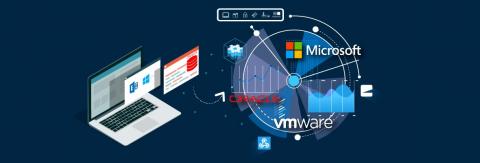
While open source technologies have seen widespread adoption over the last two decades, there is no denying the huge market share that proprietary (closed source) software commands in the enterprise. The largest software vendors like Microsoft, Oracle, IBM, SAP, and VMware have a variety of products that are market leaders in their respective technology categories.
I’ve been thinking a lot lately about the phrase “Ok, Boomer”—that popular retort Millennials often use to joke about my generation’s perceived lack of knowledge with modern-day technology. To be honest, I laugh a lot at those jokes but that’s because I relate more to the disconnect between digital master and novice.
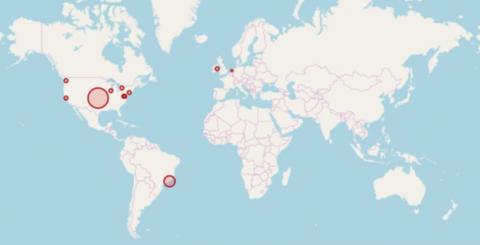
Gathering logs that contain IP addresses are quite common across your infrastructure. Your firewalls, web servers, wireless infrastructure and endpoints can contain IP addresses outside your organization. Having additional data on those logs that gives you the Geolocation of the IP address helps in your investigations and understanding of your traffic patterns. For Example, if you can see logs on a World Map, you know if you are communicating to a country you don’t normally talk to.
If you’re an Android user, relying on data from your cellular provider is one way of avoiding the risks of free public Wi-Fi – especially if you don’t have the tools or services necessary to give you full protection. Android also has a huge and widely varied user base distributed across the globe. Many of these users operate in regions where free or paid Wi-Fi isn’t even an option. In such instances, going online via cellular data is the only choice they have.
BugSplat is pleased to announce our integration with Assembla, a popular project and program management tool. This integration allows user to create defects directly from crash reports or Stack Keys in Assembla. Hyperlinks allow quick navigation from defects to crash reports and back. Defects created from BugSplat automatically include symbolic call stack information as well as other crash-specific data that can help your team crush bugs faster. Get more information on this integration in our docs.