Mailchimp
Not subscribed to OpsMatters Newsletter


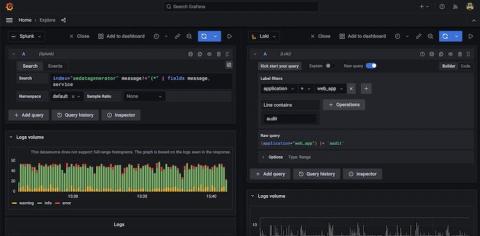
Compliance is a term commonly associated with heavily regulated industries such as finance, healthcare, and telecommunication. But in reality, it touches nearly every business today as governments and other regulatory agencies seek to enact tighter controls over the use of our collective digital footprint. As a result, more and more companies need to retain a record of every single digital transaction under their control.
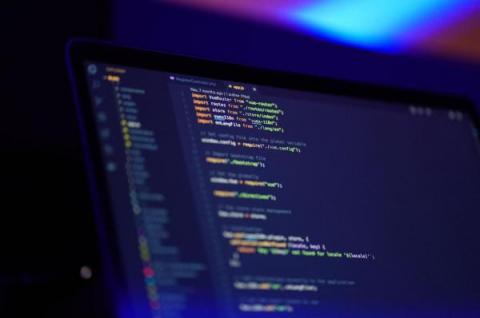
Developers love Visual Studio Code (VSCode) for its flexibility and for its goldilocks balance of powerful features and lightness / speed. VSCode is a popular choice for developers using Linux, but even those using VSCode on Mac or Windows often look for ways to use VSCode with a Linux environment. This can present a challenge.
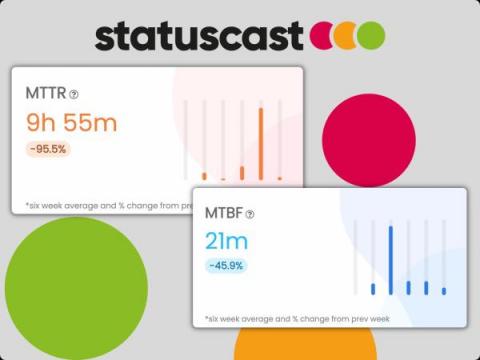
Mean Time To Repair, or MTTR, is a critical metric in IT incident management that measures the average time it takes to fix a system failure. The meaning of MTTR can be understood as the average duration needed for an IT team to recover from an incident. It is a fundamental metric for IT teams to track and analyze their efficiency in resolving incidents.
eG Innovations is an IGEL Ready partner, and I’m delighted to let you all know that we are sponsoring the IGEL DISRUPT End User Computing (EUC) Forum taking place in Nashville, April 3-5, 2023. DISRUPT is a major global event focused on end user computing and the delivery of secure, high-performance digital workspaces to increasingly distributed hybrid workforces, from the cloud. To explore the agenda for the DISRUPT23 Nashville, click here.
Your Security Operations Center (SOC) faces complex challenges for keeping corporate data safe and in the right hands everyday. The right tooling is critical for success. Deciding when—and how—to make investments in SOC tooling is complex and challenging across organizations. There’s a ton of vendor spin out there and it’s important to understand what’s real and what isn’t.
Manufacturing and industrial organizations are firmly in the era of Industry 4.0. The third wave of industrial revolution, which saw the introduction of computers, robots, and automation in industrial processes, has given way to instrumentation, and the use of advanced technologies, like machine learning (ML) and artificial intelligence (AI), using both raw and trained data, to enhance industrial processes.