Wayfair: Plug and play visibility into distributed systems with Datadog
Nick Vecellio discusses using Datadog to monitor Wayfair’s distributed systems, which span across multiple on-premises data centers, the cloud and Kubernetes.


The latest News and Information on Monitoring for Websites, Applications, APIs, Infrastructure, and other technologies.
Real User Monitoring, or RUM, is a type of monitoring technology for digital businesses that analyzes customers’ digital experiences by looking at exactly how online visitors are interacting with a website or application, analyzing everything from page load events to AJAX requests to frontend application crashes. The most commonly known example of RUM would be Google Analytics, or GA, which tracks certain spectrums of the interaction between your user and your website or webapp.
Grafana is an open source tool, with Apache 2.0 license, designed by Torkel Ödegaard (who is still in charge of its development and maintenance) and created in January 2014. This Swedish developer began his career in the .NET field and since 2012, until nowadays, he continues offering development and consulting services through this popular proprietary platform, while developing free software at the same time.
Within a Linux network or development system, launching a limited set of applications or services (often known as microservices) in a self-sustaining container or sandboxed environment is sometimes necessary. A container enables administrators to decouple a specific set of software applications from the operating system and have them run within a clean, minimal, and isolated Linux environment of their own.
We are pleased to announce the availability of Kamon APM, a hosted APM solution built from the ground up to work nicely with Kamon and along with it we are launching a Free Starter Plan. Starting today there are no excuses for your team to say that you can’t have metrics and distributed tracing in production becase, well, you can get it for free!
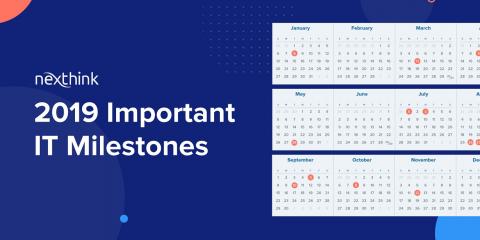
“What??? Fully end of life by April, you say? As in, ‘in-six-weeks’ April? Well, there go my weekends for a while. When will we ever get this right?” We’ve all been there at some point, completely under water, late on key projects, having to fight to get our SLA and security KPIs green and completely forget that time is running and now, again, core components are nearing their end of life. Here at Nexthink, we don’t want you to have to go through that.
So you’ve got a ClickHouse DBMS, and you’re looking for a tool to monitor it. You’ve come to the right place. In this blog post (which is part 2 of a three-part series on ClickHouse monitoring), we’ll identify and discuss the various ClickHouse monitoring tools available today.
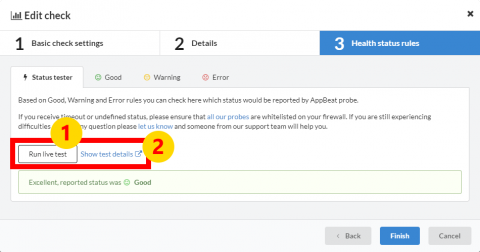
Today we published new monitoring engine which supports page integrity checks with SHA-256 hash. To enable this feature simply add or edit your periodic check and update your warning or error status rule with this snippet...
Hyperconvergence, hyperconvergent platforms, hyperconvergent modules, are relatively new terms in the world of data centers. In addition, each technology that emerges or evolves and succeeds in penetrating the market represents new challenges for monitoring platforms. Thus, hyperconvergence is another in the list, which includes elements such as the cloud, software-defined networks, edge computing, DevOps, Agile, and so many others.