How To - Monitor IoT with Catchpoint
In this video, we’re going to cover how to design and deploy an MQTT test inside of Catchpoint, and how to apply that data effectively towards troubleshooting your IoT service or application.


The latest News and Information on Monitoring for Websites, Applications, APIs, Infrastructure, and other technologies.
The primary goal of our solutions is to help companies achieve specific business goals; whether that’s maintaining and improving the user experience and overall productivity, gaining valuable insight from enhanced visibility into your organization’s IT infrastructure, developing proactive strategies that mitigate the impact of service interruptions or issues, or all of the above, Martello is proud of the products and services we are able to provide.
Some may consider kicking off another new year with their organization a daunting continuation of 2020, however, this is not the case with LogicMonitor. Personally, coming up on my two-year anniversary, I have felt intrinsic energy from day one. With two years under my belt at LogicMonitor, and witnessing first-hand the organization growing at a rapid rate, I thought I would reflect on the opportunity at hand for my colleagues and myself.
In the software lifecycle, you need to know what is affecting the customer from your frontend code to your underlying infrastructure. However, no one to date has solved for monitoring the health of software code vs. systems at the level that we have taken on — or at the scale that our customers require, as everything from grocery shopping to gaming is now digital.
In this How-To, we’re going to look at a specific Catchpoint synthetic monitor that helps you analyze the health of systems built around the Internet of things (IoT). Now, IoT is obviously a huge category, so in this case, we’re going to look at systems that utilize the Message Queuing Telemetry Transport or MQTT for short.
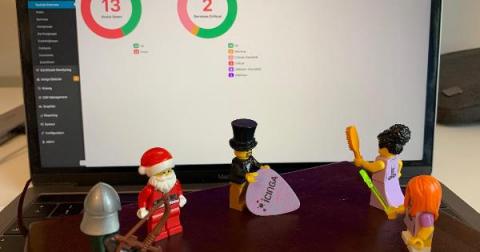
There are multiple ways to interact programatically with Icinga. Last week Henrik demonstrated how to connect to the Icinga 2 API through the Icinga 2 Console. Working with the Icinga 2 API is probably the most obvious way to interact with Icinga. Still, I would like to suggest to you another option: How you can fetch data from Icinga Web.
It’s easy to get started with Java and Honeycomb using OpenTelemetry. With Honeycomb being a big supporter of the OpenTelemetry initiative, all it takes is a few parameters to get your data in. In this post, I will walk through setting up a demo app with the OpenTelemetry Java agent and show how I was able to get rich details with little work by combining automatic instrumentation from the agent with custom instrumentation in the code.