How to monitor and troubleshoot Chrony
Find out how to effectively and easily monitor and troubleshoot Chrony using Netdata.


The latest News and Information on Monitoring for Websites, Applications, APIs, Infrastructure, and other technologies.
Find out how to effectively and easily monitor and troubleshoot Chrony using Netdata.
Performance testing is an important part of any application. It helps developers to increase the application reliability while providing a smooth user experience to the end users. However, when it comes to Unity projects, games and interactive applications have a higher requirement for performance compared to traditional applications.
The line from observability to customer joy is straighter than you think. We recently learned this from NS1, a managed DNS provider and Honeycomb customer, in a panel discussion with Nate Daly, Head of Architecture at NS1 and Chris Bertinato, Software Architect at NS1.
Hello Nexthinkers, Today is a great day for us. We just received the amazing news that for the second year running we have won 2022 Gartner Peer Insights the Customer Choice award! I wanted to take this opportunity to thank our entire community and also share why this is a big deal for us.
Data has become the most valuable thing in the modern world. According to earthweb, more than 2.5 quintillion bytes of data will be created every day in 2022. These large quantities of data should be appropriately organized to identify meaningful patterns for decision-making. Techniques like clustering are widely used to efficiently collect data into groups based on their similarities and differences and improve the observability of your data.
If you’ve been following InfluxDB, you’ve probably heard of InfluxDB IOx, the next evolution of the storage engine powering InfluxDB Cloud. However, I wanted to learn more about how the open source components of the new engine help achieve the requirements for the new InfluxDB engine and why they were chosen. This post covers that precise topic. We’ll also learn why InfluxDB chose to contribute to these open source projects and what our commitment to open source looks like today.
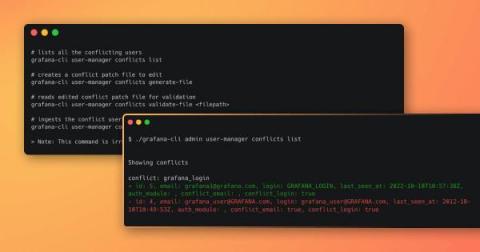
Here at Grafana Labs, one of the things we’re always working on is making Grafana more consistent. Given the increased adoption of Grafana around the world and the number of users and authentication providers we support, we wanted to create better defaults for login and email fields.