Operations | Monitoring | ITSM | DevOps | Cloud

The latest News and Information on Monitoring for Websites, Applications, APIs, Infrastructure, and other technologies.

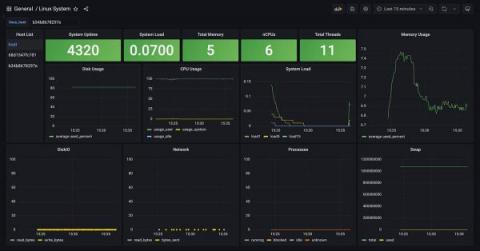
Real-Time Embedded Linux Observability with Pantavisor and InfluxDB

This article was originally published on HackMD and is reposted here with permission. Presently organizations are unable to monitor millions of embedded Linux devices in real-time. With so many different architectures and device types, aggregating telemetry and metrics and viewing that data in a centralized analysis tool is problematic. Onboarding embedded Linux devices into a telemetry service so that metrics can be easily observed is a significant challenge.

Unified Observability: Announcing Kubernetes 360

Ask any cloud software team using Kubernetes (and most do); this powerful container orchestration technology is transformative, yet often truly challenging. There’s no question that Kubernetes has become the de-facto infrastructure for nearly any organization these days seeking to achieve business agility, developer autonomy and an internal structure that supports both the scale and simplicity required to maintain a full CI/CD and DevOps approach.

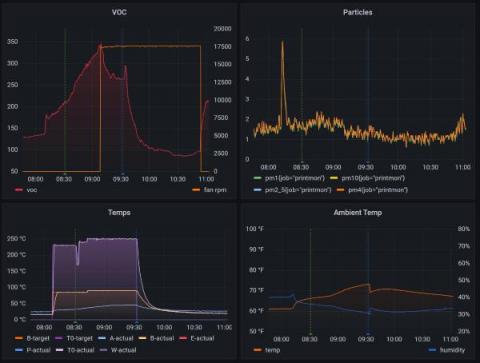
It's all about the preparation - Automated preparation!

Recently I joined a team to run a ‘Ragnar’. A ‘Ragnar’ is a running race where you and an additional seven teammates run a course that typically lasts around 24 hours non stop. Our team joined over 300 other teams running this Ragnar trail course in the middle of the woods in northern Wisconsin. This course consisted of three loops, a 3 mile loop, a six mile loop and a seven mile loop.

Sponsored Post

What Is the Controllability and Observability of Cloud Applications?

There are many computing resources used in different cloud application services to provide online software-as-a-service (SaaS). SaaS differs from traditional applications in that it works from a cloud computing environment. This means that both the application service as well as user data are being hosted by a cloud provider in the cloud. Therefore, the SaaS and data are accessible from anywhere as long as there's online access. This model provides a distinct advantage from a software perspective.

Bring Your Zombie Data Back to Life with Cribl Search

We’ve reached the point where our ability to collect data has actually exceeded our ability to process it. Nowadays, it’s commonplace for organizations to have terabytes or even petabytes worth of data sitting in storage, waiting patiently for well-intentioned systems admins to eventually analyze it.

Sponsored Post

What Makes Citrix Difficult for Synthetic Monitoring Solutions?

Synthetic monitoring and automated testing are a major advantage if you can use them. Unfortunately, some challenges stand in the way of running these technologies outside of a web browser. Trying to run synthetic monitoring on Citrix is even more challenging. Thankfully, 2 Steps has identified and solved these issues. In this post, we'll take your through the challenges that running a synthetic monitoring and automated testing solution on Citrix poses and tell you how 2 Steps makes those challenges go away.

Introducing Splunk App for Chargeback

The Splunk App for Chargeback provides the ability to analyze and manage how internal business units, departments, and individuals are consuming Splunk resources. The three main features of the App are: The Splunk App for Chargeback allows you to manage, monitor, and forecast resource utilization in your shared Splunk environment. You can use Splunk App for Chargeback to focus on any business unit, department, or an individual user.

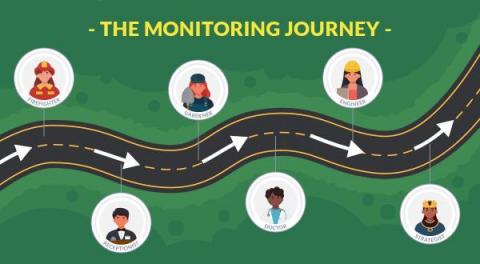
How DevOps Monitoring Works: Concepts, Types & Best Practices

DevOps is an IT delivery concept that combines people, practices and tools with the shared goal of accelerating the development of applications and services. Adopting DevOps at enterprise level typically requires: The continuous development of DevOps practices, as well as other factors like the rapid pace of modern code changes, facilitates a need for DevOps monitoring: a set of tools and processes to support the entire software development lifecycle.