The latest News and Information on Log Management, Log Analytics and related technologies.
Today we are officially releasing Graylog v3.3.6. This release includes a new enterprise output along with bug fixes that improve the functionality of Graylog. Please read on for a detailed description of the new output and the bug fixes. Many thanks to our community for reporting issues and contributing fixes!
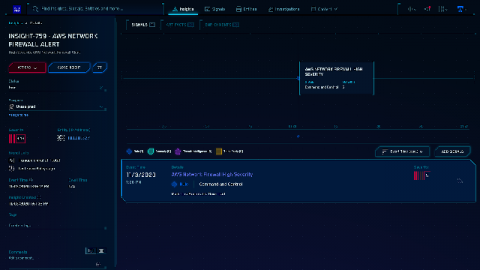
Engineering teams that build, scale, and manage cloud-based applications on AWS know that at some point in time, their applications and infrastructure will be under attack. But as applications expand and new features are added, securing the full scope of an AWS environment becomes an increasingly complex task. To add visibility and auditability, AWS CloudTrail tracks the who, what, where, and when of activity that occurs in your AWS environment and records this activity in the form of audit logs.
Over the past several months we’ve been focused on improving observability and operations workflows for Compute Engine. Today, we are excited to share the first wave of these enhancements are now available. These include: Significantly improved operating system support for the Cloud Monitoring and Cloud Logging agents. The ability to rapidly deploy, update, and remove agents to groups of VMs, or all of your VMs, by policy, with as little as a single gcloud command.
Many organizations are adopting centralized logging tools so that they have one place for all of their data. This is generally easier than having separate tools across teams for log storage and analysis. But centralized logging introduces new challenges, like how to segment those logs according to the teams or developers where they are the most relevant. And, how to manage log volume.
I would like to share our recent case study on our battling a very serious performance issue whose solution turned out to be a small change in code, but with a huge impact on all of our HTTP endpoints in our platform.
Trends in the infrastructure and software space have changed the way we build and run software. As a result, we have started treating our infrastructure as code, which has helped us lower costs and get our products to market more quickly. These new architectures also give us the ability to test our software faster in production-like deployments, and generally deliver more stable and reproducible deployments.