Operations | Monitoring | ITSM | DevOps | Cloud

Top 5 Mobile Application Performance Monitoring Tools

Your app is done and the client is ready to launch! Everything looks great. But how can you ensure that you will achieve your SLA for uptime? How are you tracking revenue growth (& optimizing)? Do you know how many users you have, and what they’re doing at any given moment in the app? What you need is a monitoring platform that will be able to track these different types of data in one place.

Mattermost Integrations Guide, Episode One: A New Hook

One of the great things about Mattermost is how well it integrates with all the other systems you use. But this flexibility can make it difficult to figure out which integration to use for each purpose. This series will review the various ways Mattermost can connect to other systems to give you an idea of what is possible and when to use what method.

The New Model for Network Security: Zero Trust

The old security model, which followed the “trust but verify” method, is broken. That model granted excessive implicit trust that attackers abused, putting the organization at risk from malicious internal actors and allowing unauthorized outsiders wide-reaching access once inside. The new model, Zero Trust networking, presents an approach where the default posture is to deny access.

Better Together: Benefits of Connecting Configuration, Change, and Release Management

Both the technology and infrastructure we use have changed how we deliver services to our customers (or employees in this case). But how are our businesses adapting to these changes? How are we identifying relationships across new environments? Are we understanding the implications of what’s being introduced? In order to keep business applications and operations running smoothly, it’s crucial to understand the value of three key ITIL practices: configuration, change, and release management.

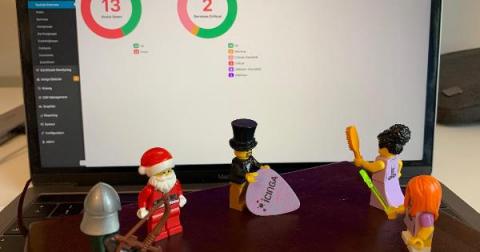
Introducing the redesigned Check Statistics widget

Those of you, who’ve already tried out the Web Interface for Icinga DB might have noticed the redesigned layout of the check execution statistics section in a monitoring object’s detail view. For all the others: Learn about it in this post. On first hand we wanted to make the informations more compact and put them in relation with each other, where possible. We aimed to keep all the information of the old one, though.

How to Debug Slow Lambda Response Times

When you build your application on top of Lambda, AWS automatically scales the number of “workers” (think containers) running your code based on traffic. And by default, your functions are deployed to three Availability Zones (AZs). This gives you a lot of scalability and redundancy out of the box. When it comes to API functions, every user request is processed by a separate worker. So the API-level concurrency is now handled by the platform.

Retail Industry Trends 2020: All-In on Digital Since COVID-19

This is the first in a series of posts we’ll be publishing on trends we’re seeing in the retail industry and how IT organizations tasked with deploying and maintaining flawless digital customer experiences can take advantage of PagerDuty to ensure always-on reliability. It’s been a tough year for retail.

Interview with Honeycomb Engineer Chris Toshok: Dogfooding OpenTelemetry

At Honeycomb, we talk a lot about eating our own dogfood. Since we use Honeycomb to observe Honeycomb, we have many opportunities to try out UX changes ourselves before rolling them out to all of our users. UX doesn’t stop at the UI though! Developer experience matters too, especially when getting started with observability. We often get questions about the difference between using our Beeline SDKs compared with other integrations, especially OpenTelemetry (abbreviated “OTel”).

Bring new insights to your IP analytics with a global administrative layer in Elastic Maps

We love maps at Elastic. In the Elastic Stack, there is one core component of all data we visualize using maps: Location. Location can mean reporting real-time positions of fleet vehicles, using a geofence for limiting search results, gauging application performance metrics from a geographic area, or identifying security threats by attaching geographic coordinates to IP addresses.