Operations | Monitoring | ITSM | DevOps | Cloud

What is Kibana? (Updated Guide For 2022)

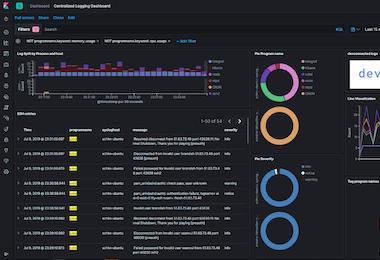
Kibana is a popular user interface used for data visualisation and for creating detailed reporting dashboards. This piece of software notably makes up a key part of the Elastic Stack alongside Elasticsearch and the extract, transform and load (ETL) tool, Logstash. In this comprehensive introduction to Kibana, we are covering all of the basics that you will need to know as a user considering using Kibana for your log data visualisation and reporting needs.

Monitoring Applications Declaratively with Terraform

Running infrastructure at scale almost always guarantees dizzying complexity and anxiety-inducing pressure to maintain systems in a production environment. This is further exacerbated when multiple delivery teams require slight variations of the same infrastructure components, across several cloud providers, each with a different set of observability requirements. Gradually, production environments become large, unmanageable, difficult to change, and perhaps resembling the figure below.

Using SAP in manufacturing for increased productivity

As the landscape continues to become more challenging, it's safe to say automation is the future of manufacturing. Changing customer demands, supply chain constraints and pressure for faster turnaround are some of the realities that companies face. This has predicated an industry agnostic need for a hands off approach to manufacturing. SAP for manufacturing offers a transformative end to end manufacturing process for more resilient, future ready enterprises.

NinjaOne Partnership with SaaS Alerts Provides Enhanced Security

Managed Service Providers (MSPs) are charged with protecting their customers from all of the threat vectors that target devices, networks, and applications. The diligence required to provide this level of protection for customers is unending. However, if an MSP is going to properly secure their customers’ environments, they first must secure their own, which is why NinjaOne has collaborated with the cybersecurity company SaaS Alerts to better protect MSPs from RMM supply chain attacks.

Compliance And The Cloud

Having achieved almost consumer-grade accessibility, public cloud adoption is increasingly driven by individual business functions. Enterprise teams no longer need to understand how the technology works, or even where the service operates from. To buy a cloud product they just need a web browser and a credit card. But this level of simplicity raises challenges of its own when it comes to regulatory concerns.

Inventory Management in the Hospitality Industry: Importance and Benefits

The hospitality industry has a broad variety such as restaurants, cafes, hotels, lodging, food & drink services, event planning and management, travel, and tourism. For small size organizations managing inventory is not a big issue but when their business grows managing inventory becomes hectic and complicated. Since the hospitality industry is full of inventory and important assets that is why inventory management in the hospitality industry is crucial to running the business efficiently.

Importance of Data Stewards for Master Data Management: The Power of a Single Version of the Truth

Not many years ago, the role of the data steward was the domain of the world’s largest organizations. When I was in college, the only person I heard of with this job title worked for one of Detroit’s Big Three automakers. Even as mainframes were supplanted by other computing paradigms, only sprawling corporations with intensive electronic data processing needs could possibly have enough information to justify a full-time staff member charged with overseeing it all.

Survey Review: Key Challenges of Scaling Observability with Cloud Workloads

When you migrated critical infrastructure to the cloud, what were your goals and expectations? Odds are, you hoped leaving on-premises infrastructure would produce significant organizational benefits. You probably figured you’d streamline operations and reduce management overhead. You felt you’d have an easier time meeting business goals. Perhaps most important of all, you likely expected your environment would become less complex, and even cost less to operate.

How to capture Spring Boot metrics with the OpenTelemetry Java Instrumentation Agent

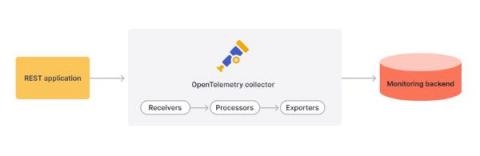
In a previous blog post, Adam Quan presented a great introduction to setting up observability for a Spring Boot application. For metrics, Adam used the Prometheus Java Client library and showed how to link metrics and traces using exemplars. However, the Prometheus Java Client library is not the only way to get metrics out of a Spring Boot app. One alternative is to use the OpenTelemetry Java instrumentation agent for exposing Spring’s metrics directly in OpenTelemetry format.