Operations | Monitoring | ITSM | DevOps | Cloud

DevOps Horror Stories: Repository of Horror

Just when you thought it was safe to go back in the water... Is there anything more frightening than the unknown? Anything the mind can conjure up is frequently scarier than something realized. The shark in Jaws is terrifying because you don’t see it until it’s too late. It’s a silent, relentless death machine, hiding in the water. A software vulnerability is the unknown, hidden deep within an ocean of code, packages and container dependencies.

Workflow 2.0

This is a conversation we had with our Engineering, Product, and Design (EPD) organization. We are publishing it as we believe it’s important to our customers and fundamental to our open source approach. You can join the conversation on GitHub. Lately, I am spending a lot of my time thinking about Sentry and its core developer story. I also consider why we haven’t been able to overcome the main challenges we recognized years ago.

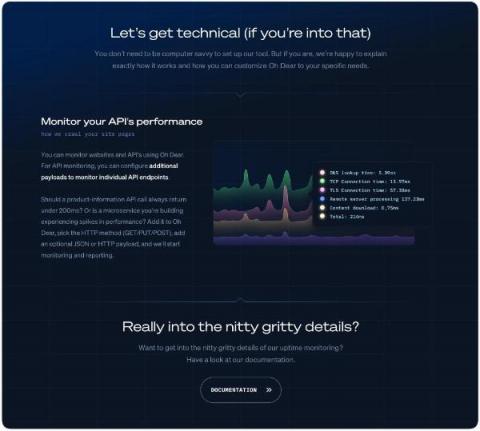
Building Oh Dear's new design: Implementing the design

In the previous blog post I gave an introduction about the project setup for the redesign of the new Oh Dear frontend. In this blog post I would like to show you how we are implementing the redesign of the Oh Dear frontend. Feel free to provide feedback on the design choices and statements made in this and future blog posts. We’d love to hear what you think of it.

Five reasons for the management to choose Serverless360

Serverless360 serves as an all-in-one add platform solution to manage and monitor Azure Serverless Applications. A massive set of product documentation enables a DevOps Engineer, Azure Developer, or Support Engineer to understand and appreciate how Serverless360 can improve their Azure experience. Even if the DevOps Engineer, Azure Developer, or Support Engineer understands the value of Serverless360, they must persuade management to purchase the product.

How Managers Can Speed Up Governance

For many managers, there are two questions on permanent loop within their work: 1. Am I doing enough? 2. How do we make things quicker? When it comes to the first question, it is often a struggle to know when to let go. As a manager's role and responsibilities grow, and as their teams reach new levels of maturity, there is a need to shift focus towards the most important processes, while letting their team take responsibility of some others.

How to Choose the Best ITSM Vendor

IT service management (ITSM) is big business. There are so many tools, vendors, and resellers out there, so how do you choose? If you work in a service desk or ITSM environment, the ITSM tool will be one of your most important spends. The right tool can help customer engagement, improve processes, and support effective incident resolution. As IT continues to recover and evolve in this new, post pandemic reality, “the best ITSM vendor” will mean different things to different people.

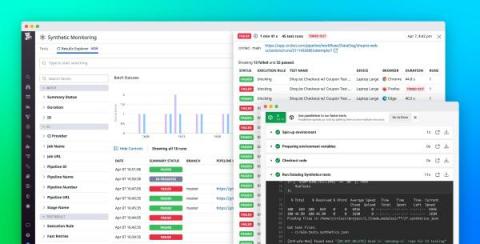
Run Synthetic tests in your CI/CD pipelines with the Datadog CircleCI orb

CircleCI is a CI/CD service that allows organizations to rapidly build, test, and deploy within their pipelines on a single platform. If you are using CircleCI for your CI/CD pipelines, you can now leverage the Datadog Synthetics CircleCI orb to implement Synthetic tests as part of shift-left testing. CI/CD testing is a widely adopted DevOps standard that helps teams mitigate any potential issues that could arise as a result of faulty code deployments.

Millions of IoT devices and routers could have a mega security flaw

An unpatched vulnerability in a popular C standard library found in a wide range of IoT products and routers could put millions of devices at risk of attack. The vulnerability, tracked as CVE-2022-05-02 and discovered by Nozomi Networks, is present in the domain name system (DNS) component of the library uClibc and its uClibc-ng fork from the OpenWRT team.

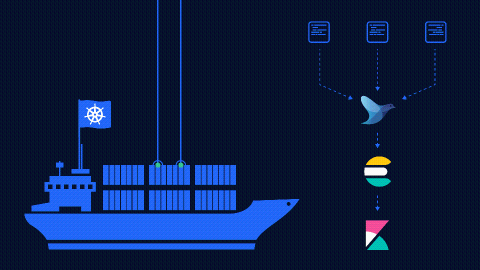
Kubernetes Logging with Elasticsearch, Fluentd and Kibana

Kubernetes, a Greek word meaning pilot, has found its way into the center stage of modern software engineering. Its in-built observability, monitoring, metrics, and self-healing make it an outstanding toolset out of the box, but its core offering has a glaring problem. The Kubernetes logging challenge is its ephemeral resources disappearing into the ether, and without some 2005-style SSHing into the correct server to find the rolled over log files, you’ll never see the log data again.