In simple terms, Oh My Posh can customize your terminal and make it more visually pleasing. According to the official Oh My Posh documentation, “Oh My Posh is a custom prompt engine for any shell that has the ability to adjust the prompt string with a function or variable”. With 275k GitHub Downloads, 1.2k forks, and 6.8k stars on the Oh My Posh GitHub Repo, developers from around the world use Oh My Posh to boost their terminals and improve their workflows.
Sleuth is pleased to announce a new set of features that enable our customers to measure, compare, and drive efficiency improvements on a per-team basis!
We are halfway through 2022 and one thing is certain – downtime is here to stay. In fact, trends are showing the frequency of downtime is increasing, along with the severity and wide-spread impact. Consumers and businesses are more interconnected and reliant on technology and software than ever, from remote business communication to simply listening to your favorite podcast on your way to work.
It’s no secret that government agencies are facing increasing restrictions and compliance regulations as they strive to ensure effective data governance and protection. “Agencies have a lot of regulated information that needs to be governed, and they need to make sure it’s not compromised,” says Corey DuBois, senior advisory presales solution consultant at ServiceNow. “There are a lot of checks and balances they need to have in place.”
The Microsoft CQD is rich with Teams data but for IT professionals, toggling between multiple dashboards can leave you feeling as though you might not have the visibility into Teams performance that you would like. For IT teams, configuring custom dashboards in Elasticsearch can take time and not always yield the results you are looking for.
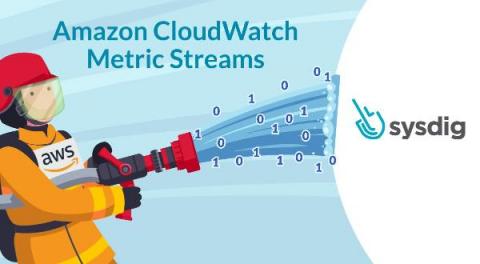
Today, we are excited to announce support for Amazon CloudWatch Metric Streams. This support will enable our customers to ingest metrics from AWS CloudWatch in real time, increase metric and state fidelity and time to ingestion while decreasing MTTR, and support cloud metrics at scale without the need to customize or re-configure new AWS service metrics. In this blog, we dig deep into.
More and more teams are moving away from monolithic applications and towards microservice-based architectures. As part of this transition, development teams are taking more direct ownership over their applications, including their deployment and operation in production. A major challenge these teams face isn't in getting their code into production (we have containers to thank for that), but in making sure their services are reliable.
Communications are evolving at a dizzying pace, challenging service providers of all stripes to adopt the latest technologies and reshape their businesses for the new world. Telco Cloud, an area my team and I are deeply focused on, is one of the key components in making that transformation a success.
When choosing between multiple software applications, users will always go with the fastest one (assuming they’re all equally reliable). As a software developer, once you have ensured your application's overall quality, robustness, and reliability, its acceptance and reputation among users depend primarily on how fast and responsive it is. Therefore, it is vital to equip your analysis toolkits with measures that speak of an application’s speed.