Mattermost v7.3 is now available
Mattermost v7.3 is generally available today. The following new features are included.


Mattermost v7.3 is generally available today. The following new features are included.
Public cloud can deliver significant business value across infrastructure cost savings, team productivity, service elasticity, and DevOps agility. Yet, up to 70% of organizations are regularly overshooting their cloud budgets, minimizing the gap between cloud costs and the revenue cloud investments can drive.
DORA metrics are becoming the industry standard for measuring engineering efficiency, but where did they come from? We talk a lot about DORA metrics here at Sleuth — what they are and how to measure them. But we haven’t shared much about the context of DORA metrics — their history and why we use them. So let’s do that. This article provides a summary.
In an ideal world, developers would be able to release new products and features from development environments into production extremely fast while also not having to stress about breaking prod. Achieving this combination of development speed while also maintaining software reliability requires having the right toolchain and automation in place.
Git is a version control system (VCS) that allows you to track the development of a project over time. At the time of Git’s inception in 2005, developers had to use the command line interface (CLI) to manage Git. Learning and using the command line however is often an extremely difficult task for many developers and in some cases represents a significant barrier of entry for those seeking to leverage the power of Git. Enter the graphical user interface (GUI), also referred to as a Git Client.
Git hooks are an accommodating solution for organizations that seek to implement consistent policies and procedures across their teams. First and foremost, they enable teams to run custom scripts according to certain Git operations. Building automation into your Git client helps remove the possibility of human error and improves workflows with little effort. Here we will explore how Husky works with Git hooks in JS projects. First, let’s start with the basics.
Process improvement is the continuous refinement of workflows within an organization. To achieve operational excellence, you need to relentlessly work on improving your processes. By doing so, you will minimize waste, optimize resources, and improve quality and productivity. Without any hesitation, let's explore the best process improvement examples.
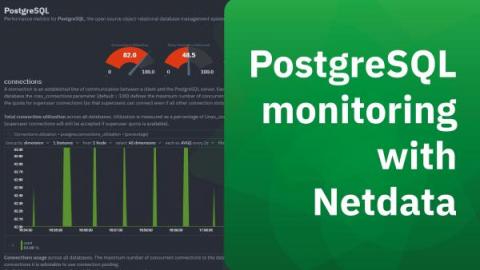
PostgreSQL is a popular open source object-relational database system designed to work for a wide range of workloads from single machines to data warehouses to web services with many concurrent users. PostgreSQL runs on all major operating systems and is used by teams and organizations across the world, including Netdata. If you are using PostgreSQL in production, it is crucial that you monitor it for potential issues. And the more comprehensive the monitoring the better!
Rated as the top order tracking and revenue generation app on Shopify, Rush lets businesses build and personalize their own dashboards to manage the post-sale process with real-time data, custom product recommendations, and user feedback. Their business model focuses on low touch and user-centered design (UCD), which leaves little room for issues impacting how people interact with the platform.