Within a Linux network or development system, launching a limited set of applications or services (often known as microservices) in a self-sustaining container or sandboxed environment is sometimes necessary. A container enables administrators to decouple a specific set of software applications from the operating system and have them run within a clean, minimal, and isolated Linux environment of their own.
We are pleased to announce the availability of Kamon APM, a hosted APM solution built from the ground up to work nicely with Kamon and along with it we are launching a Free Starter Plan. Starting today there are no excuses for your team to say that you can’t have metrics and distributed tracing in production becase, well, you can get it for free!
“What??? Fully end of life by April, you say? As in, ‘in-six-weeks’ April? Well, there go my weekends for a while. When will we ever get this right?” We’ve all been there at some point, completely under water, late on key projects, having to fight to get our SLA and security KPIs green and completely forget that time is running and now, again, core components are nearing their end of life. Here at Nexthink, we don’t want you to have to go through that.
So you’ve got a ClickHouse DBMS, and you’re looking for a tool to monitor it. You’ve come to the right place. In this blog post (which is part 2 of a three-part series on ClickHouse monitoring), we’ll identify and discuss the various ClickHouse monitoring tools available today.
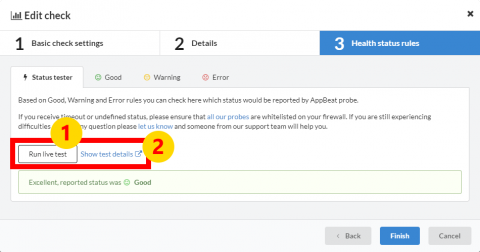
Today we published new monitoring engine which supports page integrity checks with SHA-256 hash. To enable this feature simply add or edit your periodic check and update your warning or error status rule with this snippet...
Hyperconvergence, hyperconvergent platforms, hyperconvergent modules, are relatively new terms in the world of data centers. In addition, each technology that emerges or evolves and succeeds in penetrating the market represents new challenges for monitoring platforms. Thus, hyperconvergence is another in the list, which includes elements such as the cloud, software-defined networks, edge computing, DevOps, Agile, and so many others.
By 2022, Gartner predicts that 40% of large enterprises will adopt AIOps solutions to cope with never-ending alert floods and ensure faster recovery from disruptive IT outages. The AIOps market is experiencing rapid growth with explosive enterprise adoption, accelerated revenue growth and continued investments from IT operations players.
Troubleshooting is a critical skill for developers and DevOps. As our software grows more sophisticated, our problems do too. The cloud adds a new layer of complexity since we need to know how to find a problem that doesn’t occur locally, but has cropped up on a remote system.
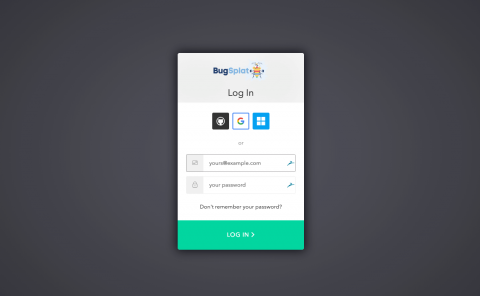
As part of our continuing security program here at BugSplat, we’re switching to an authentication service called Auth0 for all of our account logins. Auth0 is a universal authentication and authorization platform that supports customer-requested features like federated logins, which means authenticating with a different provider, and Multi-Factor Authentication (MFA) which is a two-step login protocol requiring separate verification from a mobile device to access your account.