
Operations | Monitoring | ITSM | DevOps | Cloud

Delivering Better Digital Experiences and Resilient IT Infrastructure During COVID-19

COVID-19 has caused an explosion in employees having to work remotely to maintain social distancing and prevent the rapid spread of the coronavirus. While a large remote workforce can place enormous strain on enterprise applications and hybrid infrastructure, IT operations teams must ensure that their employees can get the job done without frequent interruptions. At the same time, customers can no longer dine out or go to shopping malls, shifting to online services and mobile apps to meet their needs.
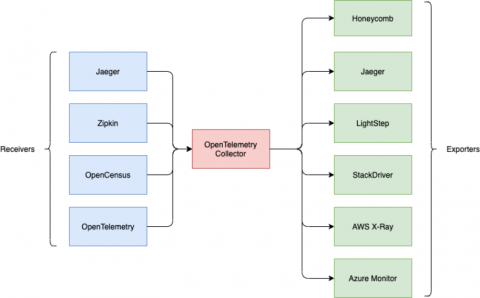

OpenTelemetry: New Honeycomb Exporters

We’re really big fans of OpenTelemetry at Honeycomb. As we’ve blogged about before, OpenTelemetry is the next phase of the OpenTracing and OpenCensus projects. Instead of working on separate but similar efforts, those two projects have merged to create OpenTelemetry. This is wonderful for the larger community as it gives people a clear way to instrument their code for metrics and traces that isn’t specific to any tool or vendor. OpenTelemetry is a CNCF sandbox project.

Prometheus vs. InfluxDB: A Monitoring Comparison

Monitoring has been around since the dawn of computing. Recently, however, there’s been a revolution in this field. Cloud native monitoring has introduced new challenges to an old task, rendering former solutions unsuitable for the job. When working with cloud native solutions such as Kubernetes, resources are volatile. Services come and go by design, and that’s fine—as long as the whole system operates in a regular way.

Building Request Metrics

We’ve been working on something big. We’re building Request Metrics, a new service for web performance monitoring. TrackJS is a fantastic tool to understand web page errors, but what if your pages aren’t broken, just slow? What if the checkout page takes 10 seconds to load? What if that user API is slowing down from your recent database change? What pages have the worst user experience? Request Metrics will tell you that.

Introducing our free Secure Remote Access Toolkit for IT teams

The global corporate landscape is on the brink of a complete premises lockdown in light of the COVID-19 crisis. Service disruption is inevitable, and enterprises’ business continuity plans are being put to the test. Despite this challenge, it’s heartening to see companies across nations take quick steps to ensure the health and safety of their employees during these trying times.

How Do I Ask For A Status Page?

Has this scenario happened to you? You found a service. A SaaS product or hosted service: it could be anything. Maybe it’s a continuous integration service or perhaps it’s a service for capturing comments on your web site. Let’s call it Useful Service. You sign up, and you’re happy with it. Now you depend on it and your fortunes are tied to it. But day in and day out, it’s there for you, working reliably. Then all of the sudden: it’s not.

Remote Work: Splunk + Zoom

As everyone is taking proactive measures to stay healthy, organizations are increasingly having their employees work from home. At Splunk, we are focused on bringing data to every question, decision and action — and remote work for us equals Zoom for online meetings and workspaces. As our customers use Splunk for real-time data processing and analytics, they use our Splunk Mobile App (Android, iOS) when they need to take their dashboards on the go.

11 Tools to Perform Technical SEO Audit in 2020

In 2019, Google has rolled out lots of updates out of which March 2019 Core Update, June Core Update, September Search Reviews update, and BERT were the major ones. BERT update was intended to better understand long-tail and conversational search queries while June Core Update impacted the websites that failed to implement E-A-T (Expertise, Authority, and Trust) Guidelines. On September 16, 2019, Google released a new algorithmic update to review (crawl and index) review snippets/search results.

Dashbird vs. AWS CloudWatch

At this moment, billions of people are rushing to the internet for work, entertainment, shopping - everything, really. It’s great that we developed this virtual world and can keep the lights on, despite what’s happening outside. On the other hand, cloud systems and developers are under pressure to meet an unparalleled demand. At Dashbird, we have always thought developers deserve the most efficient tools to discover and resolve issues in order to keep cloud apps running smoothly.

How to Ensure Great IT Performance for Remote Employees

Things are about to get real in so many ways. Companies are telling employees to work from home, which sounds great in theory — less contact, less chance for the COVID-19 virus to spread. But what about the strain it’s going to place on your IT infrastructure? Your employees will be connecting over a remote virtual infrastructure (Citrix, VMware, AWS, etc) and accessing a variety of in-house web applications (Java, .NET etc.) and SaaS services (Office 365).