Operations | Monitoring | ITSM | DevOps | Cloud

Challenges with Implementing SLOs

A few months ago, Honeycomb released our SLO — Service Level Objective — feature to the world. We’ve written before about how to use it and some of the use scenarios. Today, I’d like to say a little more about how the feature has evolved, and what we did in the process of creating it. (Some of these notes are based on my talk, “Pitfalls in Measuring SLOs;” you can find the slides to that talk here, or view the video on our Honeycomb Talks page).
Tutorial: Shipping Docker Metrics to Logz.io

Docker is an essential bridge in modern DevOps. Despite Kubernetes overtaking Docker on orchestrating containers, the Docker container itself remains the standard and likely will for the foreseeable future. We developed the Docker Metrics collector to operate as its own container that will run Metricbeat using the modules you are running in real time. Now, in addition to the Docker module, we are now releasing an AWS module for operations in the cloud.

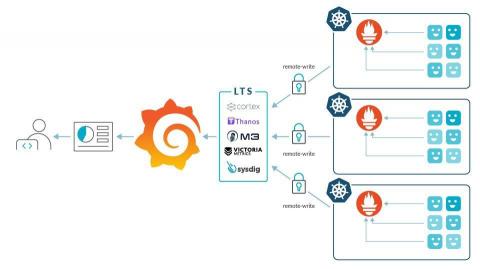
Challenges using Prometheus at scale

This article will cover the most common challenges you might find when trying to use Prometheus at scale. Prometheus is one of the foundations of the cloud-native environment. It has become the de-facto standard for visibility in Kubernetes environments, creating a new category called Prometheus monitoring. The Prometheus journey is usually tied to the Kubernetes journey and the different development stages, from proof of concept to production.

Top 10 Reasons Why NMS is A Must Have

Nothing’s worse than getting a call from the users that the network is down. Too often, IT lacks the visibility they need to get before performance issues arise, meaning you’re in the dark until a user or customer calls to complain. Once an outage happens, the clock is ticking. And the more time you take to understand and resolve the issue, the more it costs you: in terms of customer dissatisfaction, and also staff time & lost productivity.

Investing In Our Partnership with AWS

Even with a complete understanding of the benefits that come with running a hybrid environment, companies are still challenged with digital transformation best practices: what to move, when to move it, what’s being spent, how it’s performing, and what’s being overutilized and underutilized. This is why Amazon Web Services (AWS) is one of the most strategic partners in LogicMonitor’s ecosystem.

Does Observability Throw You for a Loop? Part One: Open with Observability

The duality of observability is controllability. Observability is the ability to infer the internal state of a "machine” from externally exposed signals. Controllability is the ability to control input to direct the internal state to the desired outcome. We need both in today's cloud native world. Quite often we find that observability is presented as the desired end state. Yet, in modern computing environments, this isn’t really true.

From distributed tracing to distributed profiling with Elastic APM

Distributed tracing is great — it helps you identify (micro)services within complex architectures having issues interfering with user experience, such as high latency or errors. But once a problematic service is identified, it can be difficult to find out which methods are to blame for the slowdown. Well, we have some big news to share for our Elastic APM users within the Java ecosystem.

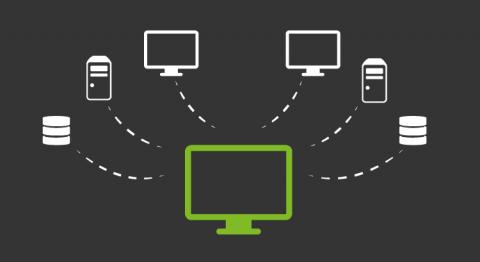
Are you worried about your office systems? Discover Pandora FMS remote monitoring software

COVID-19 is and will be the talk of the town due to its large-scale social, humanitarian and economic repercussions, but how can it affect a company’s systems? Many employers find themselves in the need to offer their employees remote working options, which means leaving the offices empty without actual machine supervision, which calls for a remote monitoring software to monitor their systems.

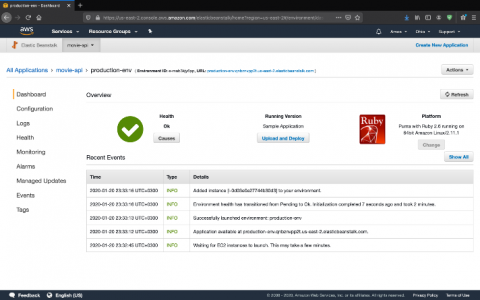
Why and How to Host your Rails 6 App with AWS ElasticBeanstalk and RDS

When you deploy a new Rails app, you typically face a double-bind. If you use an easy platform like Heroku, you could create problems for yourself as your application scales. If you use a more fully-featured platform, you risk wasting time on ops that could be spent on your product. What if you could have both: an easy deployment option that is easy to scale?