Operations | Monitoring | ITSM | DevOps | Cloud

How we're using gossip to improve Cortex and Loki availability

Have you heard about using the hash ring in Loki and Cortex? Here is a short version: In Cortex and Loki, the ring is a space divided by tokens into smaller segments. Each segment belongs to a single “ingester” (component in Cortex and Loki that receives data) and is used to shard series/logs across multiple ingesters. In addition to the tokens, each ingester also has an entry with its ID, address, and the latest heartbeat timestamp updated periodically.
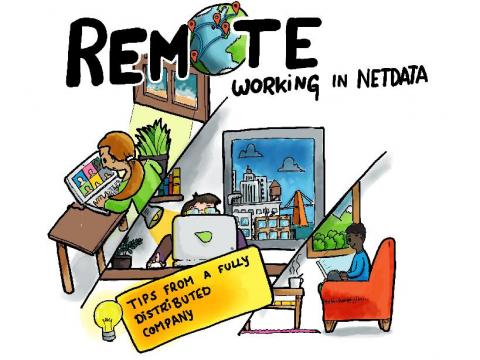
Creating a thriving, agile, remote team

The coronavirus (COVID-19) pandemic has forced many organizations to take unprecedented steps towards remote working. As a fully distributed team, we’ve faced the common challenges of remote work. Based on our experience from our very beginning in 2018, all but a few of these organizations new to remote working will face hurdles to overcome and may try to revert to colocation as soon as possible. Remote working is hard, even when it’s carefully planned and executed.

What's The Difference Between Monitoring Webhooks and Background Jobs

If you have some experience setting up monitoring for different setups, this post is for you. Since different parts of your architecture have different tasks, they also have different expectations. Today, we’ll take a quick dive into how to deal with that reality and set up monitoring for it. Warning: In this post, you’ll have to bear with our enthusiasm for setting things up perfectly.

COVID-19: A Personal Guide to Self-Isolating and Remote Working

It’s now day 3 since UK PM Boris Johnson instructed the nation to stay at home and begin self-isolating and remote working to limit the spread of Covid-19. We’re all starting to realise life may not be going back to ‘normal’ anytime soon. Aside from our nation’s unsung heroes (the NHS, Supermarket Staff, Teachers, Postal Workers, Waste Collectors, the list goes on – thank you!), many are now turning to remote working.

Your 5G infrastructure monitoring checklist

5G technology, with its speed 10 times faster than 4G LTE, can help businesses realize many long-held goals, like real-time augmented reality (AR), virtual reality (VR), distributed machine learning within the Internet of Things (IoT), autonomous vehicles, smart cities, edge computing, etc. While 5G technology is imminent and likely to transform the pace of business operations, it will bring scalability challenges along with changes to networking architectures.

Uptrends is ISO 27001 security compliant!

We are thrilled to let you know that Uptrends is now certified ISO 27001 compliant. The ISO (International Organization Standardization) sets security requirements that a company must meet before an accredited auditor can grant the certification. If you’re familiar with the certification process, you know that it takes a considerable amount of time and work; however, the benefits that it brings for our company and our clients are worth the effort. Let’s take a look.

TLS monitoring

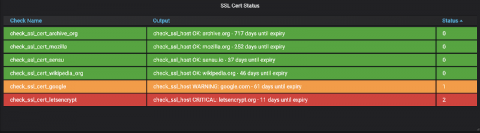
Uh oh, the site’s certificate has expired. How do we generate a new one? Where’s the private key? Which servers need the new cert? What even goes in the cert? If this sounds all too familiar, rest assured you’re not alone. Outages due to expired certs are far too common and it happens to sites of all sizes (one recent example includes Microsoft Teams going down for several hours due to an expired cert). Disruptions like this are entirely preventable with proper monitoring in place.

An Introduction to Web Proxies

Web proxies intercept traffic from your systems as they move to other systems, analyze the packets, then send the data along. There are a lot of reasons why you might want to intercept packets. Originally the main use case for a proxy was as a caching server. In this use case, the first time a person in your network goes to a website, the static content (particularly graphic images) gets downloaded and cached. Then, because the content is local, the next person to hit that site will get a fast response.

When Dedicated DevOps is Not Available

With the rise of cloud computing and modern distributed systems, we also witnessed the rise of a new practice area: DevOps. Despite being fundamental for smooth cloud operations, a dedicated DevOps practitioner is a luxury most teams can’t afford. Salaries average $130K in San Francisco, for example. When a dedicated DevOps practitioner is not available in our team, what should we do? The answer could unfold a multitude of aspects.