Operations | Monitoring | ITSM | DevOps | Cloud

Overcoming DNS barriers for Kubernetes Scaling

It was a cloudy winter morning when I had arrived at the office and found, to our horror, that a Kubernetes cluster was suffering from extremely high CPU and network usage and had become almost completely non-functional. To make things worse, restarting the nodes (the go-to DevOp solution), seemed to have absolutely no effect on the issue. Something was poisoning the network and we had to find out what it was and fast.

Top Monitoring Tools for DevOps Engineers and SREs

Monitoring has moved from a simple proactive practice to a necessity on any product launch checklist. It is crucial to pick a tool that meets your observability needs & ensures reliability of your service to your customers. Over the years, with an increase in adoption of DevOps and SRE practices, Monitoring has moved from a simple proactive practice to a necessity on any product launch checklist.

Facade Pattern in Rails for Performance and Maintainability

In today’s post, we will be looking into a software design pattern called Facade. When I first adopted it, it felt a little bit awkward, but the more I used it in my Rails apps, the more I started to appreciate its usefulness. More importantly, it allowed me to test my code more thoroughly, to clean out my controllers, to reduce the logic within my views and to make me think more clearly about an application’s code’s overall structure.

Introducing Grafana Cloud Agent, a remote_write-focused Prometheus agent that can save 40% on memory usage

Today, we are announcing the Grafana Cloud Agent, a subset of Prometheus built for hosted metrics that runs lean on memory and uses much of the same battle-tested code that has made Prometheus so awesome. At Grafana Labs, we love Prometheus. We deploy it for our internal monitoring, use it alongside Alertmanager, and have it configured to send its data to Cortex via remote_write. Unfortunately, as we scale to handle more load, our deployment becomes more and more difficult to manage.

Monitoring the infrastructure that supports remote work with Site24x7

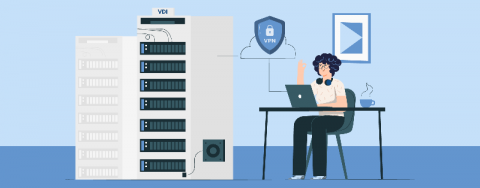
As a result of the global COVID-19 outbreak, organizations are increasingly encouraging employees to work remotely to preserve their well-being and ensure uninterrupted business productivity. Digital transformation has made this remote adoption possible and exceeded all expectations as far as the growth rate of remote work.

Monitor Scylla with Datadog

Scylla is an open source database alternative to Apache Cassandra, built to deliver significantly higher throughput, single-digit millisecond latency, and always-on availability for real-time applications. Unlike Cassandra which is written in Java, Scylla is implemented in C++ to provide greater control over low-level operations and eliminate latency issues related to garbage collection.

Securing a New Way of Working: Monitoring Those Endpoints

With more and more endpoints accessing your network remotely, you should expect rapid increases in VPN connections and usage, as well as exponential usage of cloud-based services. There are numerous Splunk apps that can help you increase the monitoring of remote endpoints but let’s showcase Splunk Security Essentials (SSE).

In Observability, RED is the New Black

When it comes to complex application integrations, RED monitoring provides a sensible and necessary common element to see how our systems are performing and to alert us to behavior which is detrimental to your customers and your business goals. So, what is RED? RED stands for rate, errors, duration and is an offshoot of the Google Golden Signals.

HTTPS sites using TLS 1.0 and TLS 1.1 are to be blocked by browsers by the end of the March 2020

The end of TLS v1.0 and v1.1 is near – the most popular browsers will either display a warning message when you visit a TLS 1.0/1.1 site or require user intervention and confirmation to connect to the website.

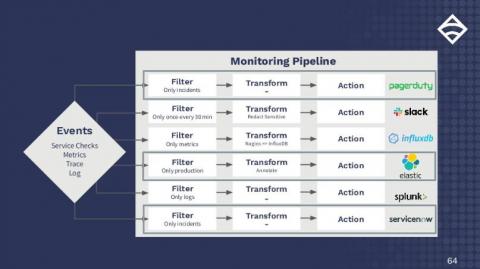
Monitoring event pipelines: Why you need one, and why you should stop rolling your own

Over the last 10 years, the landscape that we manage, maintain, and control as operators and developers has changed dramatically. We’ve shifted from monolith to microservices, from bare metal to VMs to containers to function-based computing — and it’s changed how we need to approach monitoring and observability.