Operations | Monitoring | ITSM | DevOps | Cloud

Improve Your Website's SEO with Ahrefs Webmaster Tools

Today SEO is much more than just finding high converting keywords for better ranking. Most marketers and content writers nowadays rely on different strategies to stay in the game. Imagine handling such intricate tasks manually or shuffling through several tools daily to get this done. Sounds hectic, right? But what if we told you, there’s a single package out there to make your work easier.

Introducing etrace - a multi-purpose application profiling tool

These days, the internal workings of Linux applications involve many different moving parts. Sometimes, it can be rather difficult to debug them when things go wrong or run slower than expected. Tracing an application’s execution is one way of understanding potential issues without diving into the source code. To this end, we wrote an app-tracing tool called etrace, designed to detect performance bottlenecks and runtime issues in snaps.

Black Friday is here! Would you like your eCommerce to survive it? Monitor it!

If you are reading this article, we assume it is because you have an eCommerce, a digital business you have put all your effort in (and all your money). Or maybe you’re a service provider offering services to eCommerce clients. Black Friday is coming! The official day of going crazy shopping and consuming, when Christmas shopping season is inaugurated and many retail stores and department stores take the chance to celebrate a day of sales that consumers have engraved on their shopping calendar.

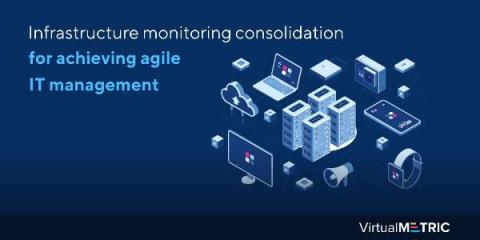
Infrastructure monitoring consolidation for achieving agile IT management

Managing large-scale deployments efficiently and resolving issues in a timely manner can be an easy task. What you need is a reliable and agile set of infrastructure monitoring tools for your enterprise IT infrastructure that possesses all the needed features for simple and stress-free management.

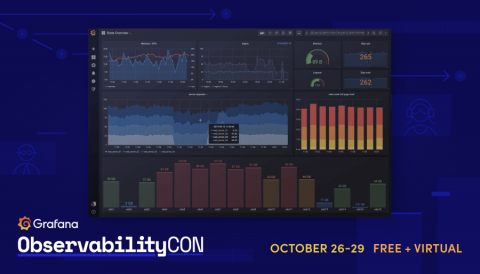
ObservabilityCON Day 4 recap: a panel discussion on observability (and its future), the benefits of Chaos Engineering, and an observability demo showcase

Over the past four days, Grafana Labs' ObservabilityCON 2020 brought together the Grafana community for talks dedicated to observability. We hope you enjoyed all of the sessions, which are available on demand now. (Link to them from the schedule on the event page). The conference wrapped up with predictions and advice from observability experts, lessons in failure, and Grafana Labs team members showcasing ways Grafana and other tools fit into an observability workflow.

Add context to your dashboards from SQL data sources New SQL tile: Line graph

Monitoring information that matters to you will often come from disparate sources – whether you are a server engineer, a SQL database administrator, or an application owner wanting a 360 view of your applications’ health. For example, you may want to visualise your server metrics from SCOM alongside historical trends from the SCOM Data Warehouse.

Oracle Functional Monitoring

All databases provide a place to run applications. Monitoring an infrastructure is usually based on its technical components which goes on to extrapolate the health of its applications and programs. However, wouldn’t it be more efficient to monitor the application’s functionality itself? So imagine you have an Order application that consists of a Web UI frontend, Web API backend, business service and an Oracle Database.

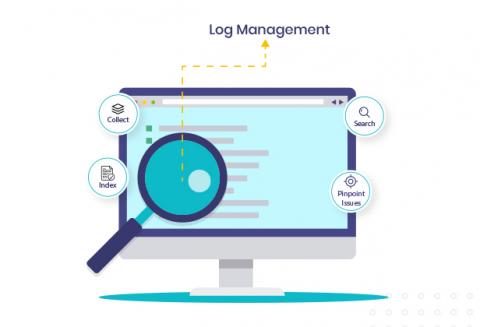
Want to Have a Log Management System that is Secure and Yet Efficient?

Across the technology and IT infrastructure domain, log files are recognized as often time-stamped files that can virtually record all critical information about events occurring within the purview of your IT network, OS, or other software applications. Some log files are humanly interpretable, while others are largely meant for machines to consume.

How to Monitor Amazon SQS with CloudWatch

Amazon SQS is a message queuing service that allows you to send and receive huge numbers of messages from a queue using a simple API. Using Amazon SQS, without setting up any infrastructure, you can have a distributed and fault tolerant queuing system. Since SQS is a managed service, you have less visibility with traditional monitoring tools. As such, it becomes even more important to take advantage of the available monitoring tools in AWS.