Operations | Monitoring | ITSM | DevOps | Cloud

Incident response: Is MTTI the metric that matters most?

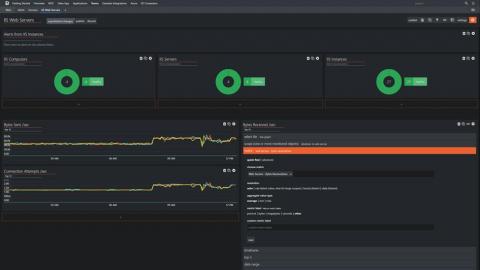
We all know that SCOM is a monitoring powerhouse, but even the biggest SCOM fan can’t deny that the SCOM Console dashboards leave much to be desired. They might look colorful, but unfortunately there’s not much else they can do. You can’t drill down further into an object, and you definitely can’t correlate it with other data you might have on that object that could be related.

Remote Prometheus Monitoring using Thanos

In a previous blog we learnt about setting up a Scalable Prometheus-Thanos monitoring stack. We also learnt about how we can cluster multiple Prometheus servers with the help of Thanos and then deduplicate metrics and alerts across them. MetricFire is a Hosted Prometheus solution, and you can use our product with minimal configuration to gain in-depth insight into your environments. If you would like to learn more about it please book a demo with us, or sign up for the free trial today.

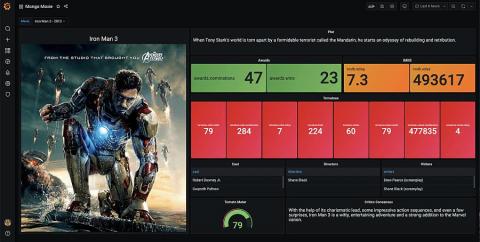
Introducing the MongoDB Enterprise plugin for Grafana

MongoDB is one of the most popular NoSQL databases in the world, used by millions of developers to store application metrics from e-commerce transactions to hospital equipment inventory, from user logins to First World War diaries. MongoDB databases contain mountains of information that SREs, software engineers, and executives can visualize to run their businesses more effectively. Grafana dashboards are most effective when they are layered with context.

VirtualMetric and CloudLand helping SMEs to solve top IT challenges during the pandemic

VirtualMetric — the all-in-one monitoring solution provider and CloudLand — one of the leading IT distributors in the Netherlands, join efforts to help SMEs from the DACH region and the Netherlands to overcome the top IT challenges during the pandemic. Although the IT sector is one of the most stable during the global pandemic crisis, small and medium enterprises need to battle their specific problems – internal and external.

Custom Headers on our WebHooks Integration

Exciting news! We have recently updated our Webhooks integration to allow custom headers in order to integrate with third party alarming tools. This update makes our webhooks integration more powerful and adaptable. The Webhook integration allows you to get RapidSpike notifications in your applications, and custom headers lets us send extra data along with the Webhook, which some third parties may require.

Are your customers catching production problems before you do?

Availability and quality are the biggest differentiators when people opt for a service or product today. You should be aware of the impact of your customers alerting you to your own problems, as well as how to stop this from becoming the norm. To make sure you don’t become an organization known for its bugs, understanding the organizational changes required to deliver a stable service is key.

Prometheus Federation with Thanos: How does Thanos Work?

Prometheus is the cornerstone of many monitoring solutions, and sooner or later, prometheus federation will appear on your radar. A well monitored application with flexible logging frameworks can pay enormous dividends over a long period of sustained growth. However, once you begin to scale your prometheus stack, it becomes difficult to keep up with your application’s demands. Prometheus is an extremely popular choice when it comes down to collecting and querying real-time metrics.

Elasticsearch Hadoop Tutorial with Hands-on Examples

In this lesson, we’ll learn how we can use Elasticsearch Hadoop to process very large amounts of data. For our exercise, we’ll use a simple Apache access log to represent our “big data”. We’ll learn how to write a MapReduce job to ingest the file with Hadoop and index it into Elasticsearch.

Expand your Sleuth monitoring reach with Datadog

Sleuth is a deployment tracking tool that gives you a deeper level of insight into your CI/CD workflows by tracking all of your team’s deployment tools from a single dashboard. Sleuth integrates with different components of your deployment pipeline and develops an understanding of your development processes. It can then automatically alert you as to when code is shipping, when manual approvals are needed, and when failures occur.