Today, Heroku is used by many developers from a wide range of small to large enterprise size companies. As you are reading this article, you yourself may also be using Heroku to build and operate apps. So, how do you monitor the apps you run on Heroku? It is seen that many people are using Heroku metrics given its standard built-in feature and it being offered for free.
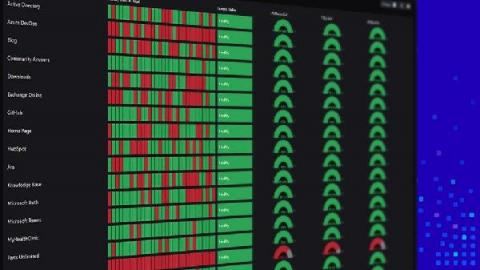
In my last blog post, we focused on creating 29 Enterprise Applications (EA). We also spent some time talking about our Critical Service Offerings (CSO) and Supporting Service Offerings (SSO). And finally, we looked at three out-of-box dashboards. If all you needed was to create a dashboard to control the boxes’ color quickly, you already have what you need.
A VPN connection comes in handy to establish a link between private servers and remote users. As a protected data path, the presence of the VPN tunnel paves the way for improved data security. Therefore, data transmissions between the network and device have the additional security of data encryption. But at the same time many inappropriate IPs can access your VPN, putting data security at stake. So, how do you deal with such situations? You definitely can’t stop using VPNs right.
Recently I got the chance to attend a PromQL training conducted by Julius Volz, the co-founder of Prometheus, and in this post I am going to share some of the key takeaways from my experience.
2020 was a whirlwind of a year that took all of us by surprise. As we transitioned to working from home and virtual meetings, we reorganized our priorities, listened to your feedback and requirements, and worked around the clock to deliver a hassle-free monitoring experience. Here's a quick recap of the features we rolled out last year, and a brief note on our plans for 2021.
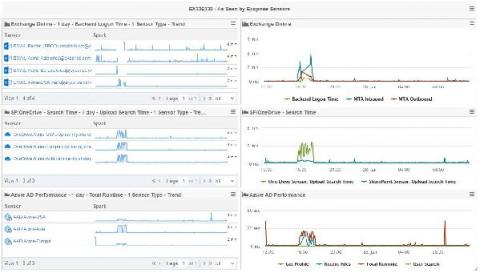
On Wednesday January 27th, 2021, Microsoft Office 365 experienced an outage affected a number of its services with a prolonged outage affecting Exchange Online.
High CPU temperature is a common issue with laptops and desktops, and it shouldn’t be ignored. If a computer system routinely generates high temps—above 80°C is usually considered undesirable—it can begin experiencing poor system performance. Over time, heat may progressively damage CPU components in addition to causing the system to lock up or shut down.
At InfluxData, we focus on our customers’ productivity — time to awesome, as we call it. Usually this is about product capabilities — InfluxDB’s features, speed, scalability, etc. But for some, your project will grow in size to the point where you need to purchase InfluxDB. And in some cases, you’ll need your compliance and/or security teams to sign off on the purchase.
SAN FRANCISCO — January 28, 2021 — InfluxData, creator of the time series database InfluxDB, today announced it has achieved Service Organization Control (SOC) 2 Type II compliance for InfluxDB Cloud, the fully managed and serverless time series platform. The certification demonstrates InfluxData’s ability to implement critical security policies and prove compliance over an extended period.