Operations | Monitoring | ITSM | DevOps | Cloud

Investigating the Database Family Tree

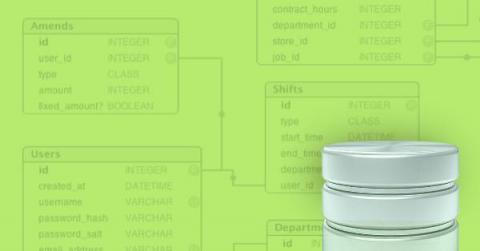
Investigating your family tree can be an interesting experience. For example, what if you discovered you were related to a famous person who won a Nobel Prize or performed a heroic act? Conversely, what if you realized you had an ancestor who was an infamous criminal? Much like examining your genealogy can be an exciting adventure, looking at the family tree of your database can prove to be just as rewarding. Databases occasionally undergo a phenomenon known as drift.

Overcoming Information Barriers in Microsoft Teams

The phrase “Teams is slow” means that somewhere something isn’t working. But who in the organization should lead the charge to address the problem – especially when the problem isn’t Teams? This blog will examine the different information barriers in Microsoft Teams and how to overcome them.

Reduce costs and increase performance with query caching in Grafana Cloud

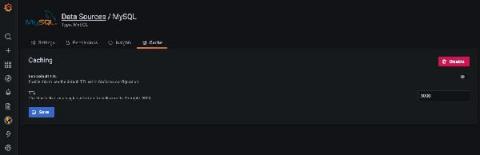
We are excited to announce the launch of query caching in Grafana Cloud, which can significantly reduce load times and costs of your most popular Grafana dashboards. Now, when the same query is submitted repeatedly, the results will come back from the cache rather than the data source itself. This not only lowers load times for popular dashboards, but will also reduce API costs for your data sources and decrease the likelihood that those APIs will rate-limit or throttle requests.

Difference Between IPv4 and IPv6: Why haven't We Entirely Moved to IPv6?

IPv4 and IPv6 are the two versions of IP. IPv4 was first released in 1983 and is currently widely used as an IP address for a variety of systems. It aids in the identification of systems in a network through the use of an address. The 32-bit address, which may store multiple addresses, is employed. Despite this, it is the most widely used internet protocol, controlling the vast bulk of internet traffic. IPv6 was created in 1994 and is referred to as the "next generation" protocol.

AppDynamics vs. Dynatrace vs. Scout | A Side-by-Side Comparison

Choosing the perfect Application Performance Monitoring tool for your business always remains a tricky decision. There are so many options in the market, and each alternative has its own set of features and flaws. Sometimes, the profile of two solutions overlaps, which creates an even bigger grey area around which to opt.

Bi-Directional Integration for SCOM & your ITSM Tools

Bi-directional sync enables data to be sent to and from SCOM and your ITSM tools, in the following ways: a) OUTBOUND Notifications (PUSHES alerts from SCOM to another tool) b) INBOUND Notifications (PULLS updates on alerts into SCOM from another tool) This means you can choose which SCOM alerts to send across to your ITSM tools (Cherwell or ServiceNow), they are then raised as incidents, and then using bi-directional sync, info relating to the incidents is pulled back into SCOM (Incident ID, Configurat

Why integrate SCOM with anywhere?

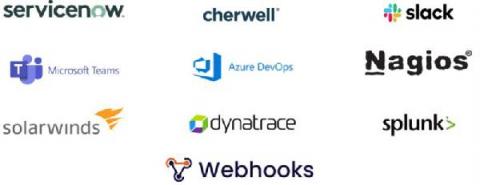
While SCOM is a valuable monitoring tool, you may also be using a suite of monitoring tools, such as SolarWinds to monitor network devices, VROps to monitor VMware, and Nagios to monitor your Linux devices, as all these tools are best in class. But, you don’t want to be looking in numerous different consoles to gather all your monitoring data!

Sponsored Post

6 Use Cases for Digital Experience Monitoring

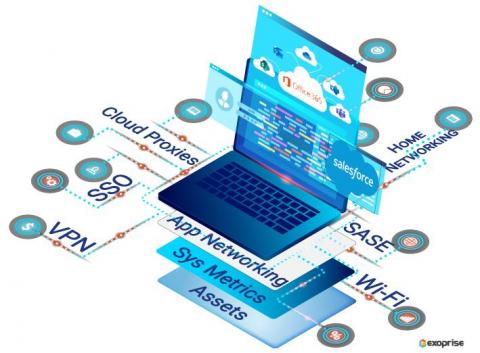
If you live and breathe in the technology industry, chances are you are hearing Digital Experience Monitoring a lot these days. So what is Digital Experience Monitoring (DEM), and why is IT obsessed with it? With a remote-first culture brewing in every company, IT needs to ensure that employees on their machines are productive and satisfied with the performance of typical enterprise applications such as Microsoft 365, Salesforce, Workday, etc. A DEM solution collects application and desktop user experience (UX) insights holistically, giving IT a broader context for troubleshooting performance issues. Let's discuss six use cases for DEM.