Operations | Monitoring | ITSM | DevOps | Cloud

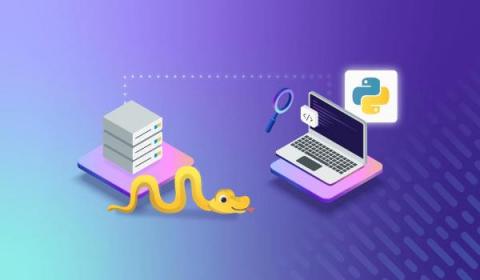
How to Perform Python Remote Debugging

Debugging is the process of identifying, analyzing and removing errors in the software. It is a process that can start at any stage of the software development, even as early as the software has been written. Sometimes, remote debugging is necessary. In the simplest terms, remote debugging is debugging an application running in a remote environment like production and staging.
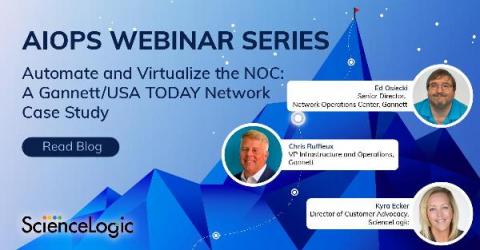
Automate and Virtualize the NOC: A Gannett/USA TODAY Network Case Study

Mission creep is a phenomenon that occurs after a project begins and gains momentum, but then gradually grows beyond the original, intended scope. One day you wake up and realize that, instead of an efficient, manageable project, you’ve got a monster on your hands. For enterprises in the midst of dynamic growth, IT infrastructure is often beset by mission creep. The incumbent organization acquires smaller operations, integrates their technology, and soon things are out of control.

Top 7 Dynatrace Competitors to Know in 2021

Dynatrace is a publicly-traded global technology company that provides a software intelligence platform based on artificial intelligence (AI) and automation to monitor and enhance application performance, development and security, IT infrastructure, and user experience for enterprises and government organizations around the world. The headquarters of Dynatrace is in Waltham, Massachusetts. Dynatrace's CEO is John Van Siclen.

Jaeger vs OpenTracing - Key differences, use-cases and alternatives

Jaeger and OpenTracing are both open-source projects. Jaeger was originally built by teams at Uber and then open-sourced. The OpenTracing project was also started by teams at Uber, and hence they are compatible with each other. While Jaeger is an end-to-end distributed tracing tool, OpenTracing is a set of APIs and libraries that can be used to instrument your application.

Taming Rails Logging with Lograge and LogDNA

Rails is a classic on Ruby for a reason. The framework is powerful, intuitive and the language has a low entry bar. However, being designed when systems existed on a single server, standard Rails logging is excessively fractionalized. Even on a single server, a straightforward call can quickly turn into seven unique, unconnected logs.

Visualizing Your Time Series Data with the Highcharts Library and InfluxDB

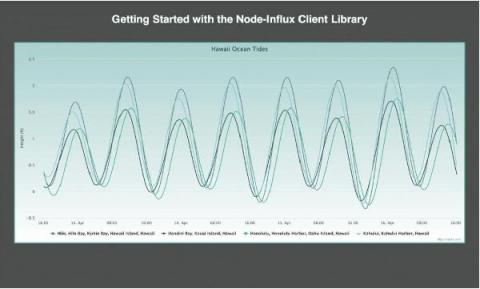
If you’re building an IoT application on top of InfluxDB, you’ll probably use a graphing library to handle your visualization needs. Today we’re going to take a look at the charting library, Highcharts, to visualize our time series data with InfluxDB Cloud. However, I also encourage you to take a look at Giraffe, a React-based visualization library that powers the data visualizations in the InfluxDB 2.0 UI.

The 95th Percentile: How to Manage Capacity Before You Run Out

One of the largest challenges with network bandwidth metering is the way traffic flows. Traffic comes in bursts. It’s never a constant, predictable stream of data you can measure once, spec hardware for and be done with (wouldn’t that be nice?!). Instead, you need to account for the dynamic nature of bandwidth utilization and its impact on performance. You’ll never be able to predict every burst of traffic your network experiences.

Understanding Cardinality in a Monitoring System and Why It's Important

The journey to becoming cloud-native comes with great benefits but also brings challenges. One of these challenges is the volume of operational data from cloud-native deployments — data comes from the cloud infrastructure, ephemeral application components, user activity, and more. The increased number of data sources does not only increase datapoint volume – it also requires that monitoring systems store and query against data with higher cardinality than ever before.