Operations | Monitoring | ITSM | DevOps | Cloud

Sponsored Post

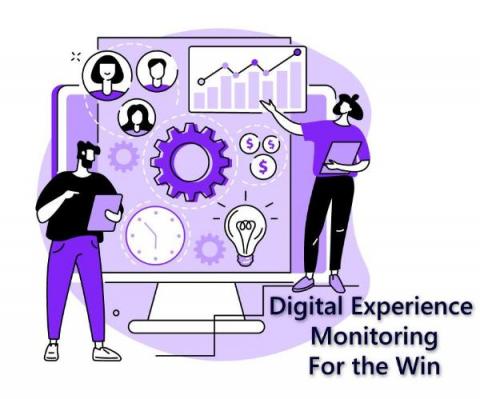
Digital Experience Monitoring Growth For the Business Win

Application Performance Management (APM) measures how a SaaS or Web application performs on the backend (for Devops). End-User Experience Management (EUEM) focuses on user behavior within those applications. Network Performance Monitoring and Diagnostics (NPMD) collects network telemetry to facilitate performance degradation. DEM combines all these tools to holistically look at the entire digital journey and see how each dependency drives successful experiences for customers and employees.

Sponsored Post

Observability, AIOps, APM, and i2M: The Partner Ecosystem for IBM MQ Enterprises

Complex enterprises have an integration infrastructure (i2) layer that connects technologies and applications across cloud, data center, virtualized systems, mainframe, edge computing, etc. The i2 layer includes a core middleware application (such as IBM MQ) along with many other "integration" technologies, such as MFT (managed file transfer), IoT, REST APIs, DataPower Gateway, and other messaging technologies (i.e., Kafka, TIBCO EMS, IBM ACE, IBM Integration Bus (IIB) and more).

Hybrid Cloud Infrastructure: A Complete Migration, Cost Management, and Optimization Checklist

The success of your enterprise’s digital transformation relies in no small part on your hybrid cloud infrastructure, which SearchCloud Computing defines as “a cloud computing environment that uses a mix of on-premises, private cloud and third-party, public cloud services with orchestration between these platforms.” Because this infrastructure is not a homogeneous environment, migration, management, and optimization can be an ongoing challenge.

Why Intuitive Troubleshooting Has Stopped Working for You

It’s harder to understand and operate production systems in 2021 than it was in 2001. Why is that? Shouldn’t we have gotten better at this in the past two decades? There are valid reasons why it’s harder: The architecture of our systems has gotten a lot more sophisticated and complex over the past 20 years. We’re not running monoliths on a few beefy servers these days.

6 AIOps Myths You Should Be Wary Of

AIOps myths and how to avoid them Gartner coined the term AIOps in 2016 to refer to the combining of “big data and machine learning to automate IT operations processes, including event correlation, anomaly detection and causality determination.” In the five years since, AIOps has grown leaps and bounds — last year, AIOps was at the peak of the Gartner hype cycle.

Deploy SigNoz using Helm charts, 500+ members on our slack community - SigNal 08

Welcome to SigNal 08, and the last SigNal issue of 2021! 🥳 This month, we made numerous PRs improving our product experience, added new awesome contributors, and launched a new initiative to discover better UX for our users. We also crossed 500+ members on our Slack community! 🥳 Wrapping up 2021, let’s see what Humans at SigNoz were up to in the month of December!

Introducing Grafana University: our virtual hands-on education platform that's free and easy to use

Grafana Labs has had a long commitment to educating our customers and community about all of our open source technologies and products, with our community Slack, webinars, conferences, documentation, and of course, this blog. In 2021, we decided that it was time to create a formal education program to provide more structured, repeatable, and scalable learning experiences – all while providing the same compelling and quality content our community is accustomed to.

ELK vs Graylog: Log Management Comparison

As organisations face outages and various security threats, monitoring an entire application platform is critical in order to determine the source of the threat or the location of the outage, as well as to verify events, logs, and traces in order to understand system behaviour at the time and take proactive and corrective actions.

What Is AIOps? A Complete Beginner's Guide

Gartner predicted, by 2020 90% of Artificial Intelligence (AI) and Machine Learning (ML) would have been deployed in enterprises through “AIOps” – a combination of machine learning and operations. An AIOps approach has the potential to reduce costs and risks by automating routine IT Operations tasks while returning more control over decisions to the organization.