Operations | Monitoring | ITSM | DevOps | Cloud

Monitoring system performance metrics with Graphite

In this article, we will explain what system performance metrics are and why you need to monitor them. Then we will look at Graphite and Grafana monitoring systems, which make it easy to collect, save and visualize metrics. Finally, we will consider why you should choose MetricFire to monitor your system’s metrics. If you would like to learn more about the benefits of MetricFire, book a demo with our experts or sign up for a free trial today.

How to manage cardinality with out-of-the-box dashboards in Grafana Cloud

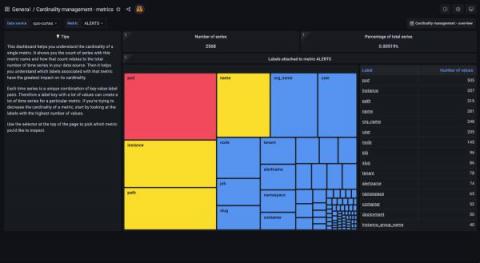
When there’s a cardinality explosion, it can cause problems: It’s a surprise, it’s noise, and it can increase your costs or cause performance degradation of your systems. Over the past year, we’ve improved our time series storage systems so that under normal use, high cardinality is no longer an issue. But as the operator of an observability platform, you should have tools you need to help protect that infrastructure.

Quickly troubleshoot application errors with Error Reporting

Are you familiar with the four golden signals of Site Reliability Engineering (SRE): latency, traffic, errors, and saturation? Whether you’re a developer or an operator, you’ve likely been responsible for collecting, storing, or analyzing the data associated with these concepts. Much of this data is captured in application and infrastructure logs, which provide a rich history of what is happening behind the scenes in your workloads.

Sponsored Post

How MSPs can benefit from AIOps adoption/strategy and add value-added services

According to Gartner, enterprise usage of AIOps is set to surge from a mere 5% in 2018 to a whopping 30% in 2023. To survive in an increasingly competitive market, MSPs must not only respond well to customer expectations but anticipate them. Another Gartner report states that by 2025, over 80% of public cloud managed and professional services deals will require both hybrid and multi-cloud capabilities from the provider, up from below 50% in 2020.

Lightrun Releases KoolKits - Debugging Toolkits for Kubernetes

KoolKits (Kubernetes toolkits) are highly-opinionated, language-specific, batteries-included debug container images for Kubernetes. In practice, they’re what you would’ve installed on your production pods if you were stuck during a tough debug session in an unfamiliar shell. To briefly give some background, note that these container images are intended for use with the new kubectl debug feature, which spins up Ephemeral containers for interactive troubleshooting.

How to Test Salesforce Multi-Factor Authentication

Assuming you have correctly configured the user ids for MFA authentication in Salesforce, end-users should see the following screen when trying to login into the CRM application. The TOTP-based verification code is generated in third-party authenticator apps (Google or Microsoft) on your mobile device when you first scan the QR code or enter the key manually in the app. In this article, we’ll guide you through all the steps you need to set up our Salesforce MFA Web Sensor in your environment.

Jaeger Tracing: A Friendly Guide for Beginners

Written by @thetomzach @ Aspecto. In this guide, you’ll learn what Jaeger tracing is, what distributed tracing is, and how to set it up in your system. We’ll go over Jaeger’s UI and touch on advanced concepts such as sampling and deploying in production. You’ll leave this guide knowing how to create spans with OpenTelemetry and send them to Jaeger tracing for visualization. All that, from scratch.

Lightrun Announces GA Support for Visual Studio Code

Lightrun is the world’s first IDE-native observability platform. A developer-first product, Lightrun enables engineering teams to connect to their live applications and continuously identify critical issues without hotfixes, redeployments, or restarts. We are proud to announce the general availability of the Lightrun extension for Visual Studio Code, the popular IDE from Microsoft.

Full-Cycle Observability With Instana and Lightrun

Understanding everything that happens inside a production environment is a notoriously difficult task. Instana’s solution helps developers and DevOps become aware of problems quickly – problems that are rooted in both infrastructure-level information and application-level information. Lightrun, on the other hand, enables practitioners to drill deeper into line-by-line, debugger-grade information from your production systems – enriching the existing information Instana delivers.